Fleet maintenance insurance impact is real—and it shows up in what you pay, what gets denied, and how quickly claims get closed. For commercial fleets, maintenance isn’t just about preventing breakdowns; it’s one of the strongest tools you have to reduce risk in the eyes of insurance carriers.
In fact, your insurer cares less about your intentions and more about your proof. That’s why documented inspections, consistent service intervals, and fast repairs can influence premium calculations, liability decisions, and your ability to negotiate better terms. If you operate in South Florida or anywhere in the U.S. where accident frequency, traffic density, and weather hazards are high, maintenance can make the difference between stable premiums and yearly rate hikes.
Why insurers pay attention to maintenance
Commercial auto insurance pricing is built around one thing: risk. Insurers want to know how likely your vehicles are to be involved in a loss whether that’s a collision, a roadside breakdown that causes an incident, or an equipment failure that leads to injury or property damage.
A well-maintained fleet signals lower risk because:
-
Vehicles respond better in emergency situations (braking, steering, stability)
-
Small issues get fixed before they trigger accidents
-
Breakdowns decline, which reduces exposure on busy roads and job sites
-
Maintenance records help prove your fleet is run responsibly
A neglected fleet, on the other hand, raises red flags. Late brake service, bald tires, worn suspension, and unresolved warning lights aren’t just repair concerns—they can become claim concerns.
To build stronger documentation and reduce surprises, many fleet managers connect routine checks with Fleet Inspection Services so inspections are consistent, repeatable, and easy to track across vehicles.
The maintenance factors that influence premiums most
Insurers don’t review every oil change receipt in detail, but they do pay attention to patterns especially when a claim occurs. Here are the areas that most often affect how carriers view your fleet.
1) Brake and tire condition (stopping distance = liability)
Brake performance and tire grip are among the fastest ways a minor incident becomes a major claim. If an accident involves rear-end impact, loss of control, or poor stopping distance, investigators may look at service history.
Consistent brake inspections, pad/rotor replacement schedules, and tire rotations/pressure checks help demonstrate that your vehicles were roadworthy and managed properly.
2) Lighting and visibility systems
Non-functioning lights, worn wipers, fogged lenses, and weak signals increase the chance of collisions especially in rain, night routes, or heavy traffic. Insurers view visibility-related failures as preventable.
3) Steering and suspension reliability
Worn tie rods, ball joints, shocks, or alignment issues can increase crash risk and uneven tire wear. These problems often develop slowly, which is why routine inspections matter.
4) Preventive maintenance adherence
A fleet that follows service intervals (oil, fluids, filters, belts/hoses, cooling components) tends to have fewer roadside incidents and mechanical failures. Fewer incidents often means fewer claims—and that can help when renewal time comes.
Claims, investigations, and “maintenance negligence” risk
One of the biggest hidden costs in fleet insurance isn’t just premium pricing—it’s what happens after an incident.
If a collision or loss appears connected to mechanical condition (for example, brake failure, tire blowout, steering issue), the insurer may request service records. If your documentation is missing or shows repeated deferrals your business can face:
-
More claim scrutiny and slower settlements
-
Increased odds of partial denial (depending on policy details and investigation findings)
-
Higher renewal premiums due to elevated risk classification
-
Exposure in liability disputes if maintenance is questioned
Even when the accident wasn’t “caused” by maintenance, poor documentation can make it harder to defend your fleet’s operational standards.
Maintenance documentation: the “proof” that protects you
Maintenance reduces risk. Documentation reduces friction.
When fleets keep clean, consistent records, it becomes easier to:
-
Show your vehicles were maintained on schedule
-
Demonstrate a safety culture to underwriters
-
Support drivers and managers in claim statements
-
Identify repeat issues and correct root causes
Your documentation should include:
-
Scheduled service logs (date, mileage, work performed)
-
Inspection checklists (DVIRs and routine inspections)
-
Repair orders and parts replaced
-
Notes on urgent defects and resolution timing
-
Standard procedures for “vehicle out of service” decisions
If managing this across multiple vehicles feels overwhelming, standardizing your routine with one provider can simplify the process and help you keep consistent records for renewals.
How maintenance can help you negotiate better insurance terms
Premiums aren’t always fixed. Many carriers will consider fleet controls when underwriting—especially if you can clearly show fewer incidents, better compliance, and stronger oversight.
Maintenance supports negotiation by improving:
-
Loss history (fewer breakdown-related incidents and claims)
-
Vehicle condition scoring (underwriter confidence)
-
Operational consistency (fewer surprise failures)
-
Safety posture (easier to justify better rates)
When you combine solid maintenance records with fleet inspections and fast repairs, you’re not just reducing risk—you’re building leverage.
Practical steps to improve your insurance profile with maintenance
You don’t need a complicated system to see results. Start with steps that are easy to execute and easy to prove.
-
Set fixed service intervals by vehicle type and usage
-
Standardize inspection checklists (daily/weekly/monthly)
-
Prioritize safety-critical repairs (brakes, tires, steering, lights)
-
Track defects and repair turnaround time
-
Keep records centralized so they’re accessible during claims or renewals
-
Schedule proactive inspections before renewal periods
These actions reduce real risk and also help demonstrate control—two things insurers reward.
Why mobile fleet service helps reduce risk faster
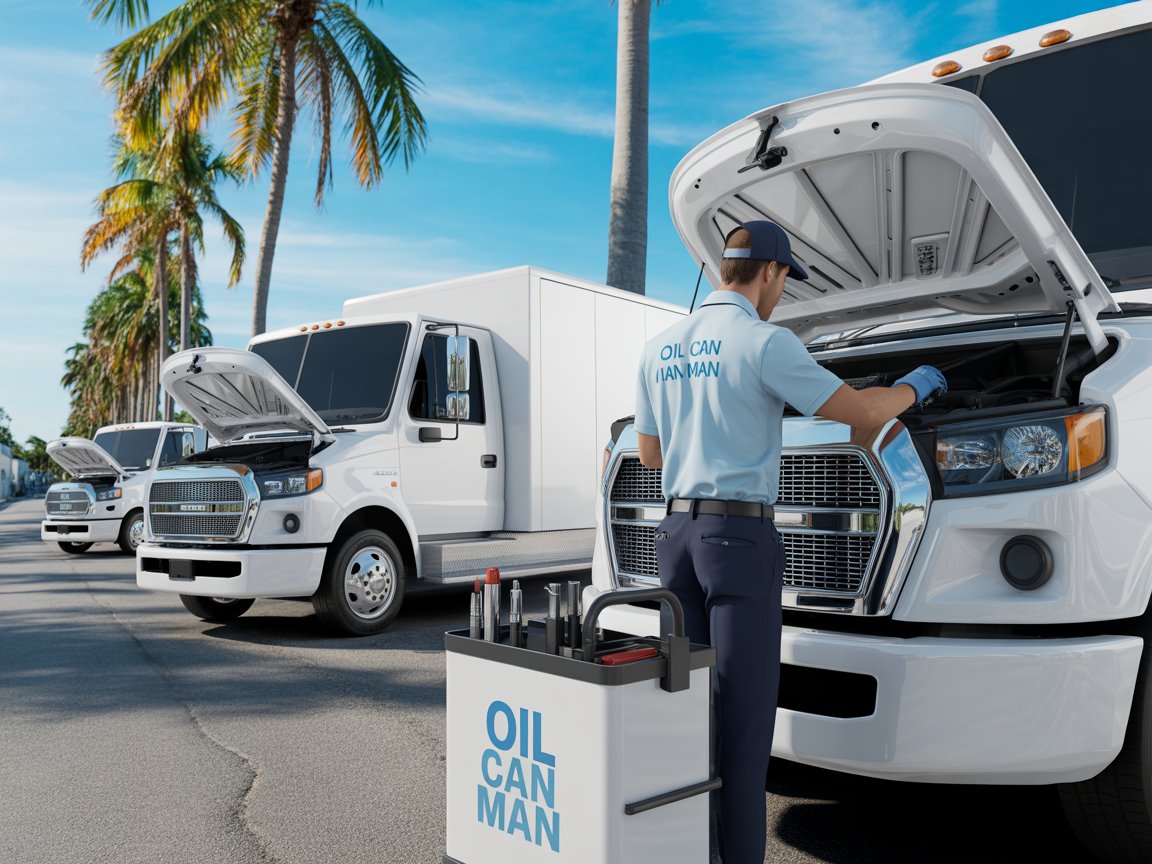
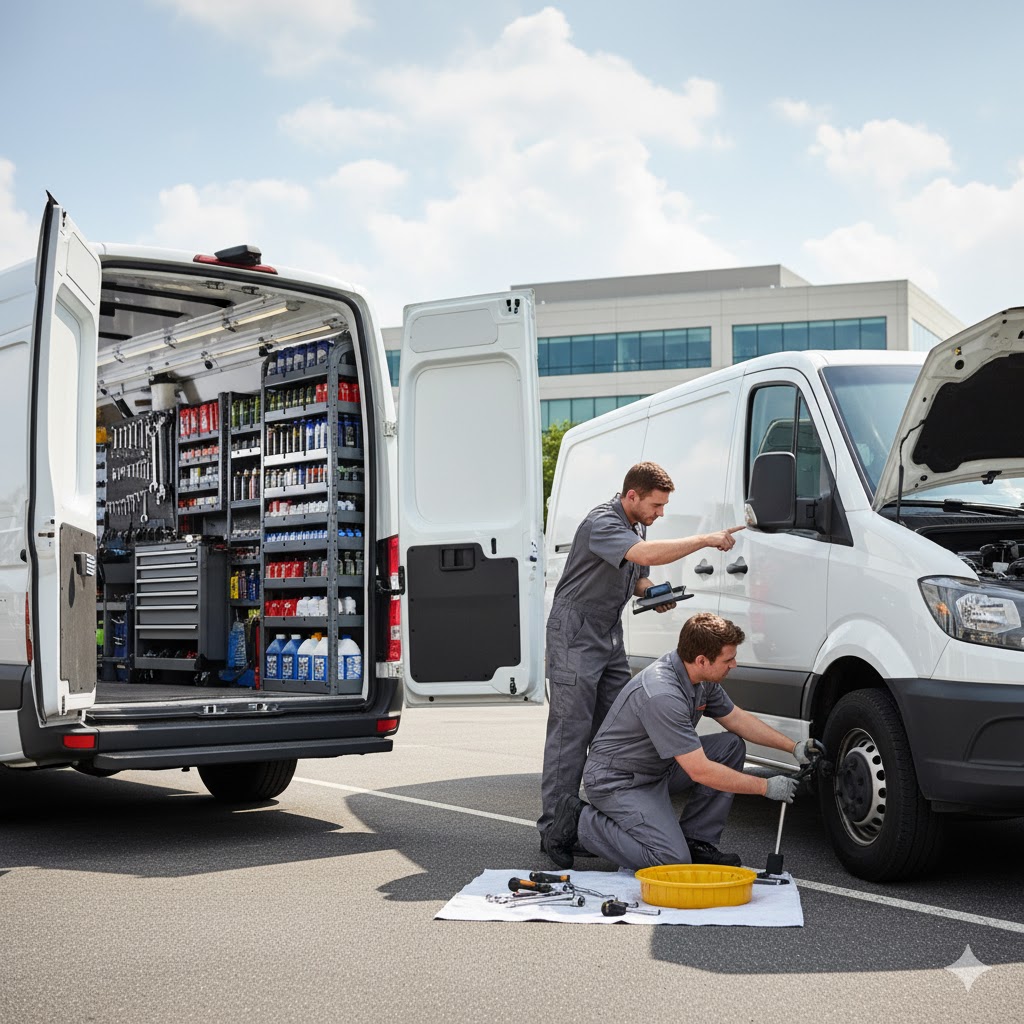
One reason fleets fall behind isn’t lack of intent it’s downtime. Vehicles are needed on routes, at job sites, and in customer schedules. Mobile service makes it easier to keep up without pulling units off the road for hours.
On-site maintenance helps by:
-
Reducing missed service windows
-
Catching early issues before they grow
-
Keeping your fleet road-ready with less disruption
-
Creating consistent service records across vehicles
Ready to reduce risk and protect your premiums?
If you want fewer breakdowns, cleaner records, and a stronger case at renewal time, Oilcanman can help your team stay ahead of repairs with dependable on-site fleet support. Call now to book your fleet service appointment at 1 (954) 764-8117 and keep your vehicles safer, more reliable, and easier to insure.