A Leak Does Not Automatically Mean Replacement
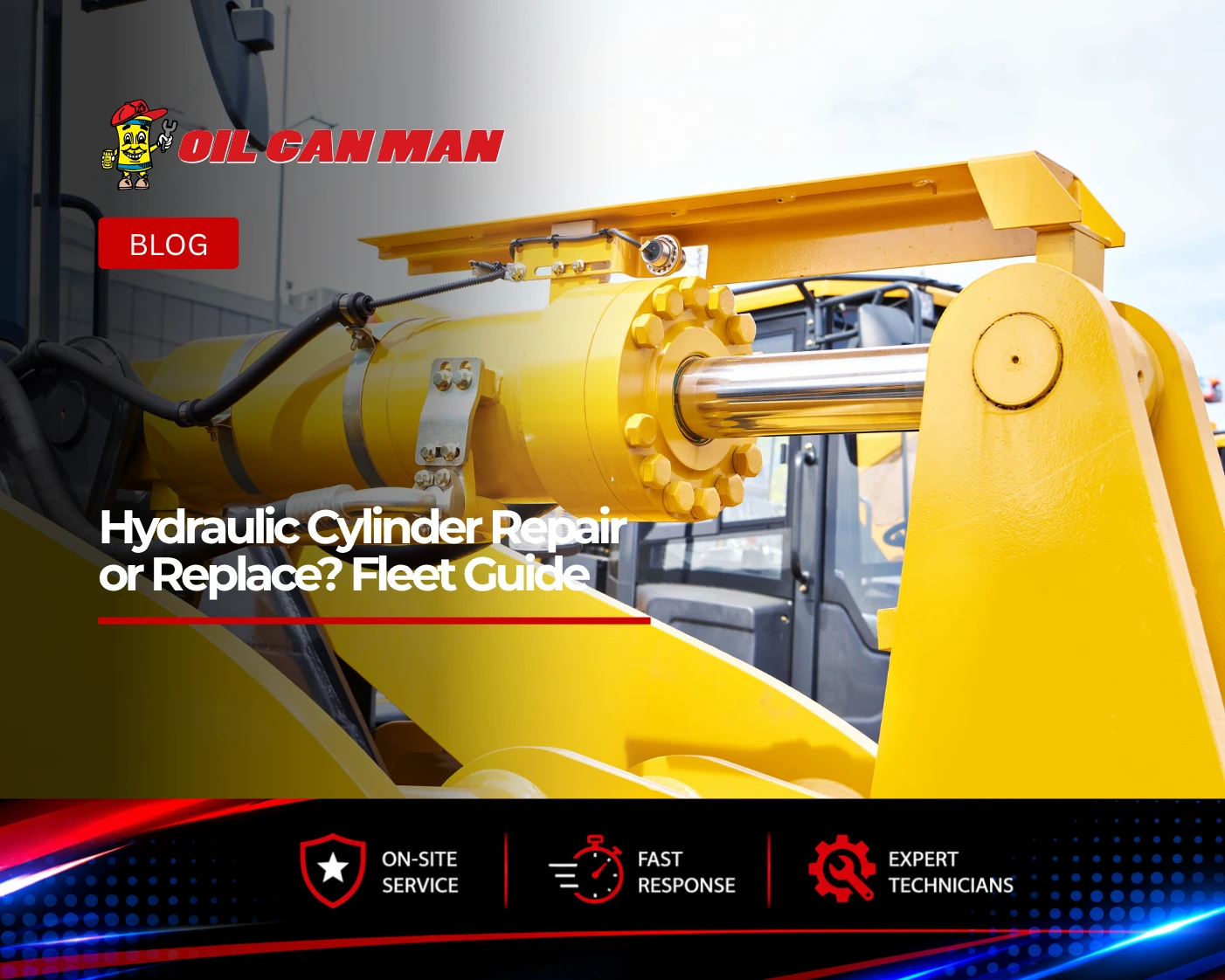
When a cylinder leaks, drifts, slows down, or loses lifting power, ordering a new unit may seem safest. However, hydraulic cylinder repair can restore reliable operation at a lower cost when the rod, barrel, seals, mounts, and internal parts remain serviceable.
A complete diagnosis should come first. A pump, valve, hose, contaminated fluid, pressure problem, or misalignment can imitate cylinder trouble. The right choice protects uptime, controls spending, and reduces the risk of hydraulic cylinder failure.
Repair, Rebuild, and Replacement Explained
A repair or reseal addresses a limited problem, such as worn seals, O-rings, wipers, wear rings, fittings, or another serviceable component.
A hydraulic cylinder rebuild involves disassembly, measurement, and inspection. Work may include rod repair or replacement, barrel honing, new seals, reassembly, and testing.
Hydraulic cylinder replacement means installing a complete new, remanufactured, or compatible assembly. Caterpillar’s cylinder service options include resealing, repairing, rebuilding, and replacement, showing why condition and application should guide the decision.
Warning Signs That a Cylinder Needs Attention
Fluid Loss and Rod Damage
Oil around the rod or gland, fluid under the equipment, wet fittings, or frequent reservoir top-offs can indicate a leaking hydraulic cylinder. The source may also be a hose or fitting, so visible fluid does not prove the complete assembly must be replaced. Scoring, pitting, corrosion, damaged chrome, or a bent rod can destroy new seals and cause repeated hydraulic cylinder failure.
Drifting, Weakness, or Uneven Movement
A boom, liftgate, dump bed, forklift mast, or attachment that moves without input may have internal seal bypass. A leaking valve can cause similar drift. Longer cycle times, reduced lifting capacity, hesitation, jerking, or uneven extension may indicate low pressure, restricted flow, air, damaged seals, or binding.
Before service, secure the equipment, relieve stored pressure, and follow manufacturer procedures. OSHA identifies hydraulic energy as hazardous energy that must be controlled during maintenance.
What Determines Whether Hydraulic Cylinder Repair Is Practical?
Rod and Barrel Condition
Inspect the rod for scratches, pitting, corrosion, chrome damage, bending, and sealing-surface wear. Minor defects may be repairable. Deep scoring or a badly bent rod may make rod replacement or complete hydraulic cylinder replacement more practical.
Check the barrel for scoring, excessive wear, distortion, cracks, corrosion, and damaged welds or mounts. A sound barrel may be honed during a hydraulic cylinder rebuild. Structural damage requires caution because dependable load control matters more than the lowest quote.
Seals, Contamination, and Alignment
An isolated seal failure may justify a reseal. Repeated failures can indicate side loading, pressure spikes, heat, contamination, or an incorrectly sized part. Donaldson’s hydraulic contamination guidance recommends clean fluid handling, filtration, and proper maintenance. Pins, bushings, brackets, and alignment should also be checked because new seals will not correct binding.
When to Repair, Rebuild, or Replace
Repair or Reseal
Repair is appropriate when seals or wipers are the main problem, the rod remains smooth and straight, the barrel has no structural damage, parts are available, and the unit has not failed repeatedly. A leaking hydraulic cylinder with isolated seal wear may return to service without a complete new assembly.
Rebuild
A hydraulic cylinder rebuild may provide better value when the original unit is costly, custom, or difficult to source, but its major parts can be restored. It also allows technicians to measure internal wear and recondition the rod or barrel when practical.
Replace
Hydraulic cylinder replacement is often stronger when the barrel is cracked or distorted, several parts need extensive work, welded mounts are damaged, parts are obsolete, or previous repairs have failed. Replacement may also reduce downtime when a correct unit is available but rebuild parts or machining have long lead times.
Avoid fixed percentage rules. Compare safety, reliability, equipment age, warranty, remaining life, parts availability, and the cost of another hydraulic cylinder failure.
Compare Total Cost, Not Only the Quote
A hydraulic cylinder repair quote is only one part of the decision.
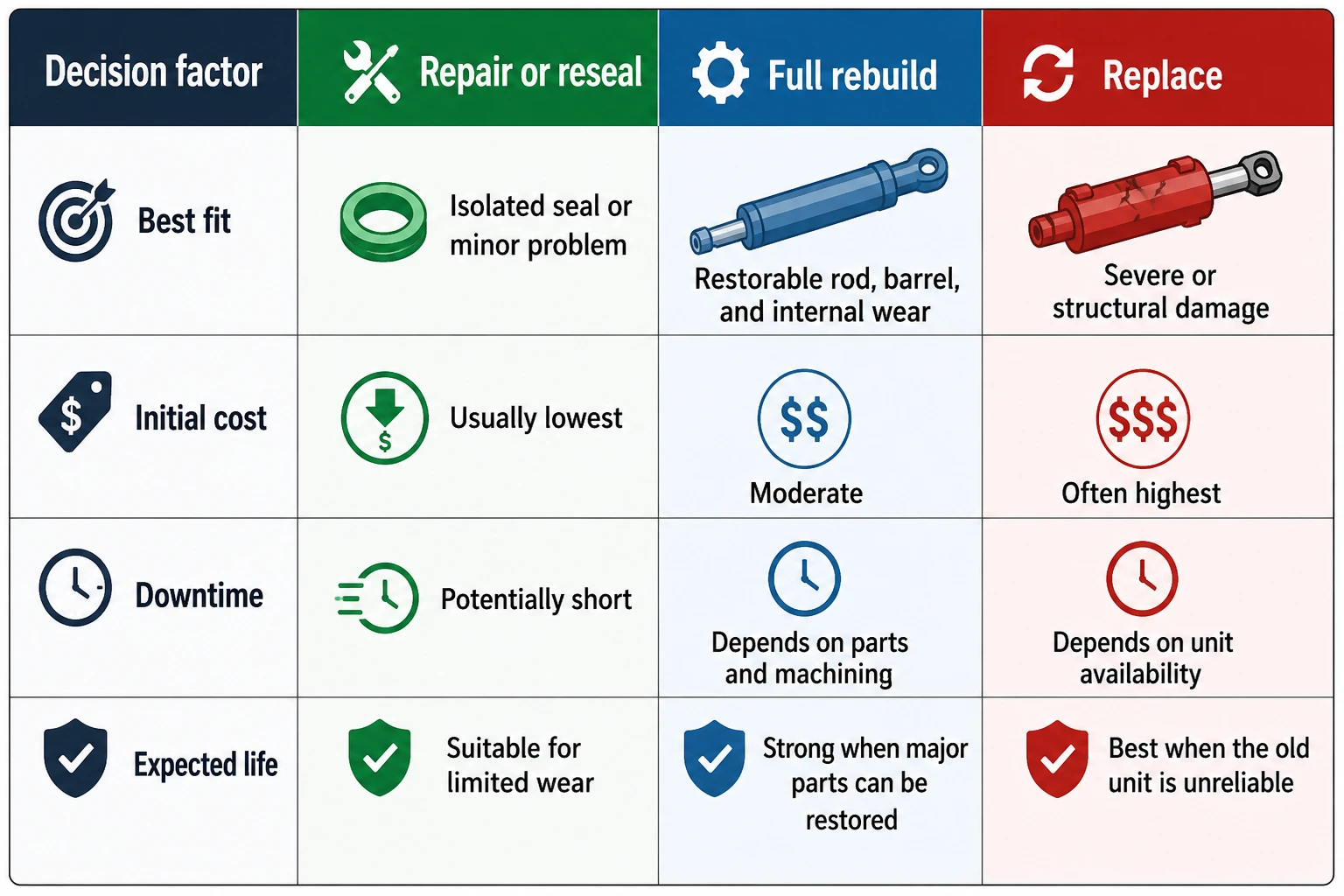
Include removal, installation, testing, towing, rentals, delayed deliveries, missed jobsite hours, warranty, and the risk of a second shutdown. Oil Can Man’s guide to the cost of delaying fleet maintenance explains why deferred service can increase downtime and operating risk.
A Common South Florida Example
Consider a Fort Lauderdale contractor with a dump trailer that leaks at the rod seal and slowly lowers under load. A straight rod, serviceable barrel, and isolated seal wear may support a fast reseal. A pitted rod, scored barrel, and contaminated oil may make rebuilding or replacement better for protecting the work schedule.
Diagnose the Entire Hydraulic System
A cylinder can appear defective when the cause is a restricted hose, weak pump, leaking valve, clogged filter, incorrect relief setting, overheated fluid, air entry, or side loading. Oil Can Man’s hydraulic systems troubleshooting guide explains why pressure, flow, drift, cycle time, fluid condition, and alignment matter.
Caterpillar’s hydraulic technical analysis guidance recommends checking cylinder drift, cycle time, and system pressure to uncover hidden problems.
Not sure which component is failing? Oil Can Man can inspect the cylinder, hoses, pump, valves, and surrounding system at your South Florida location.
Mobile Hydraulic Repair Support in South Florida
Oil Can Man provides mobile hydraulic repair for fleets and equipment operators in Fort Lauderdale, Miami, Palm Beach, and nearby communities. Onsite diagnosis at fleet yards, warehouses, job sites, and commercial facilities can reduce transportation time before the cause is known.
The team supports trucks, forklifts, trailers, heavy equipment, cylinders, hoses, pumps, valves, and full systems. Learn more about mobile hydraulic repair in Fort Lauderdale. Some cylinders may still require removal, specialty machining, or shop-based testing.
Frequently Asked Questions
Can a Leaking Hydraulic Cylinder Usually Be Repaired?
Yes, when serviceable seals are the problem and the rod, barrel, mounts, and internal surfaces remain usable. Nearby hoses or fittings may also be the true source.
What Causes Cylinder Drift?
Internal seal bypass, valve leakage, pressure loss, contamination, or mechanical problems can cause drift. Testing helps identify the responsible component.
Is Rebuilding Cheaper Than Replacing?
It can be for large, custom, or expensive cylinders. Compare labor, machining, parts, testing, lead time, remaining life, and lost production.
When Is Replacement Safer?
Replacement is usually more appropriate when the barrel is cracked, the rod is severely bent, mounts are damaged, corrosion is extensive, parts are obsolete, or earlier repairs have been unreliable.
Protect Uptime Before a Small Leak Becomes a Shutdown
The decision depends on condition, repairability, equipment age, parts availability, expected life, safety, and downtime, not the leak alone.
For hydraulic cylinder repair and full-system diagnosis in South Florida, request an onsite hydraulic inspection from Oil Can Man or call 954-764-8117. Early service can reduce disruption and prevent a minor defect from becoming a larger system failure.