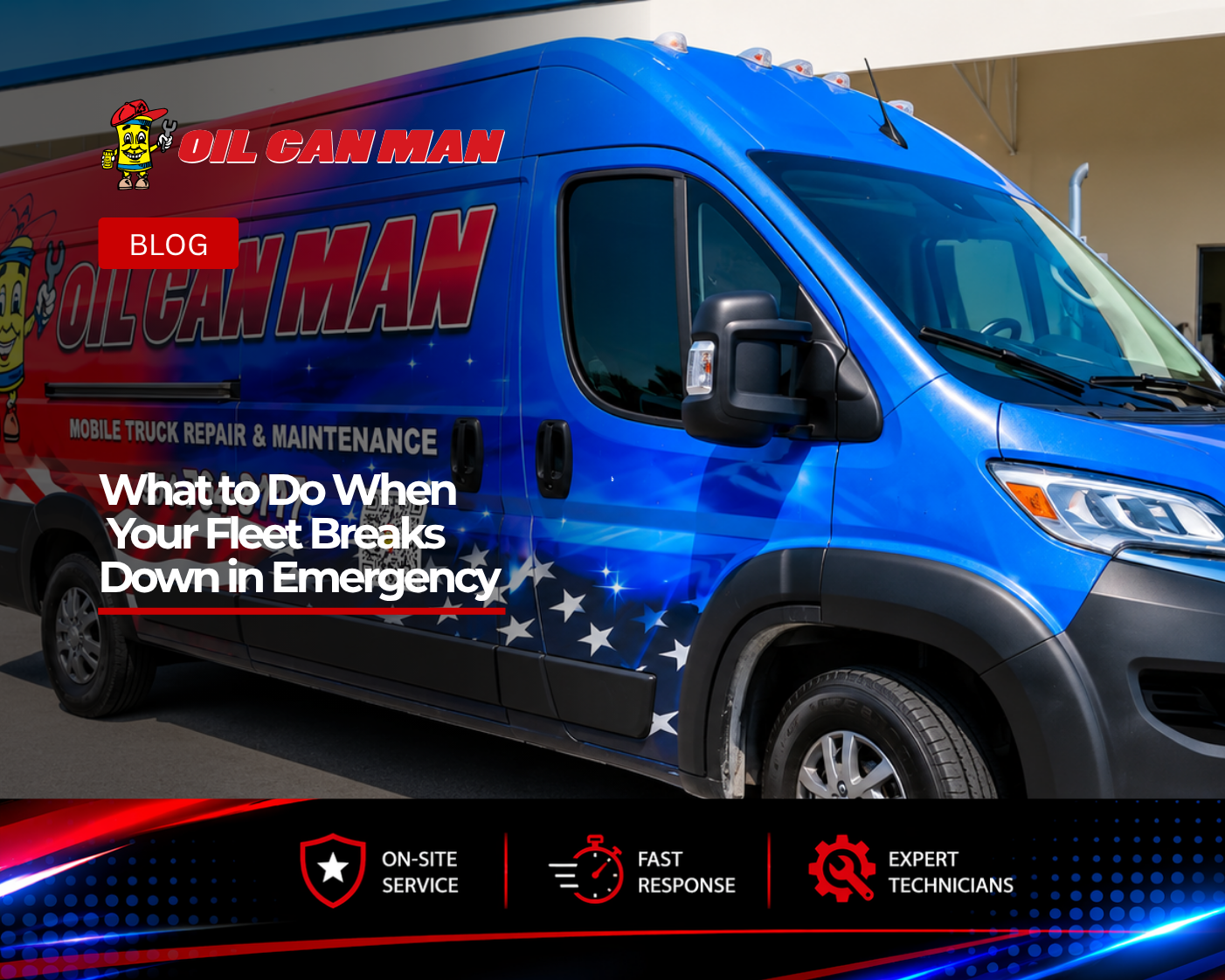
What to Do During a Fleet Breakdown Emergency: 7 Steps
A fleet breakdown emergency can leave a commercial truck, delivery van, or service vehicle stranded and disrupt your entire operation. Whether the problem involves brakes, tires, overheating, or engine failure, knowing what to do next helps protect drivers and avoid unnecessary delays.
The priority is simple: secure the situation, contact the appropriate assistance, and arrange a safe repair or recovery.
Oil Can Man provides 24/7 roadside fleet assistance throughout South Florida, helping businesses respond to unexpected vehicle breakdowns.
Need roadside assistance now?
Call 24/7 Fleet Roadside Assistance
Fleet Breakdown Emergency: What to Do First
| Priority | Immediate action |
|---|---|
| 1. Safety | Stop in a safe location if possible and activate hazard lights. |
| 2. Emergency response | Call 911 if there are injuries, fire, or an immediate danger to traffic. |
| 3. Vehicle location | Record the road, direction, nearest exit, and GPS location. |
| 4. Roadside assistance | Contact a commercial fleet roadside service provider. |
| 5. Fleet operations | Notify dispatch and arrange backup vehicles or route changes. |
Following a clear response procedure helps drivers and fleet managers make decisions without overlooking important safety concerns.
Step 1: Prioritize Driver and Public Safety
When a fleet vehicle develops a mechanical problem, driver safety comes before troubleshooting.
If the vehicle can be moved safely, the driver should pull away from active traffic and activate the hazard warning lights.
If the truck cannot be moved safely, avoid actions that could increase the danger.
Drivers should:
- Turn on hazard lights immediately.
- Stay clear of moving traffic.
- Avoid inspecting or repairing the vehicle from an exposed roadside position.
- Follow company safety procedures and emergency responder instructions.
- Use appropriate warning equipment when required and safe to deploy.
For applicable commercial motor vehicles, FMCSA regulations under 49 CFR § 392.22 generally require hazard flashers and emergency warning devices when stopped on a highway or shoulder, subject to specified exceptions. Warning devices generally must be placed within 10 minutes.
Drivers should receive training on the correct placement requirements and should never enter dangerous traffic conditions simply to deploy equipment.
Step 2: Determine Whether Emergency Services Are Needed
Not every vehicle breakdown requires 911, but some situations present immediate risks.
Call 911 when there is:
- An injury or collision requiring emergency assistance.
- Fire, heavy smoke, or another immediate threat.
- A dangerous spill or suspected hazardous-material release.
- A disabled vehicle creating an immediate traffic hazard.
For a routine mechanical breakdown without an immediate emergency, contact a qualified roadside fleet repair provider.
Drivers should not attempt repairs involving unsafe brakes, damaged steering components, or other safety-critical systems.
Step 3: Identify the Problem and Share Your Location
After securing the situation, the next step is communicating accurate information to fleet dispatch and the repair provider.
What Information Should Drivers Report?
| Information | Example |
|---|---|
| Vehicle type | Box truck, semi-truck, delivery van |
| Location | Highway, direction, exit, mile marker |
| Vehicle identification | Unit number, make, model |
| Symptoms | Overheating, flat tire, brake warning |
| Vehicle condition | Starts but cannot move; engine stalled |
| Safety concerns | Obstructed lane, smoke, leaking fluid |
| Cargo information | Loaded or empty; any special hazards |
Drivers should report what they observed rather than assume the cause of the failure.
For example, an engine that will not start could have a battery, charging, starter, electrical, or fuel-related problem.
Providing accurate information can help the repair provider determine what equipment and assistance may be needed.
Step 4: Contact a 24/7 Fleet Roadside Assistance Provider
A dependable emergency fleet repair provider can assess whether a vehicle is suitable for roadside service or requires transport to a repair facility.
Oil Can Man provides mobile fleet repair and maintenance for commercial vehicles throughout Broward, Miami-Dade, and Palm Beach counties.
Its roadside support covers services such as vehicle diagnostics, tire repairs, electrical troubleshooting, cooling system repairs, and other eligible mechanical work.
What Happens After You Call?
The service team can review the reported vehicle problem and location, discuss available assistance, and determine the next steps.
Whether the repair can be completed onsite depends on the vehicle’s condition, safety, equipment, and required parts.
For emergency fleet assistance in South Florida, call (954) 764-8117. Phones are answered 24/7.
Step 5: Decide Between Mobile Repair and Towing
Not every disabled commercial vehicle needs to be transported to a repair shop.
Some mechanical problems can be diagnosed and repaired onsite. More extensive repairs may require a facility or specialized recovery equipment.
| Breakdown problem | Recommended next step |
|---|---|
| Battery or electrical issue | Request diagnostics and assess onsite repair options. |
| Flat tire or blowout | Arrange professional tire service or recovery as needed. |
| Brake or steering failure | Keep the vehicle out of service until professionally evaluated. |
| Engine overheating | Stop safely, allow the system to cool, and request an inspection. |
| Major engine damage | Arrange professional assessment and appropriate recovery. |
| Transmission failure | Request diagnostics to determine repair or towing requirements. |
A qualified technician should determine whether the truck is safe to return to service.
Oil Can Man offers mobile commercial truck tire service and fleet brake repair.
For more information about the repair process, read the company’s 24/7 roadside fleet repair guide.
Step 6: Reduce the Operational Impact of Fleet Downtime
A vehicle breakdown can interrupt deliveries, appointments, and other commercial operations.
While the vehicle is being assessed, fleet managers should review the operational impact and arrange alternatives.
Ways to Reduce Business Disruptions
Assign a backup vehicle: Transfer work or cargo when it can be done safely and legally.
Adjust routes: Redistribute scheduled deliveries or service calls among available vehicles.
Notify customers: Communicate realistic updates when deliveries or appointments are affected.
Document downtime: Track when the breakdown was reported, assistance was requested, and the vehicle returned to service.
Review recovery costs: Record repair expenses, towing requirements, and operational disruptions.
These records can help businesses evaluate recurring breakdowns and improve future response planning.
Step 7: Document the Breakdown and Prevent Repeat Problems
Once the vehicle is repaired, the fleet manager should document what happened.
A useful breakdown report includes the vehicle identification, driver observations, diagnosis, failed components, repairs completed, and time out of service.
Common Causes of Emergency Fleet Breakdowns
| Common problem | Preventive action |
|---|---|
| Tire failure | Check inflation, tread condition, and tire damage. |
| Brake problems | Schedule brake inspections and address reported defects. |
| Battery failure | Inspect connections and perform battery and charging tests. |
| Engine overheating | Monitor coolant levels, leaks, and cooling components. |
| Electrical failure | Investigate recurring warning lights and intermittent faults. |
| Transmission problems | Follow applicable service intervals and investigate shifting concerns. |
Although preventive maintenance cannot eliminate every breakdown, regular inspections can help identify some problems before they interrupt operations.
Oil Can Man offers preventive fleet maintenance to help commercial fleets monitor vehicle condition and plan service.
How to Prepare Your Fleet for Future Roadside Emergencies
A written breakdown-response plan helps drivers know who to contact and what information to provide.
Every fleet should establish procedures covering driver safety, emergency contacts, roadside assistance, vehicle recovery, and breakdown reporting.
Drivers should also know where required safety equipment is stored and how to use it correctly.
Fleet managers can review repeated mechanical problems to determine whether maintenance schedules or inspection procedures need adjustments.
24/7 Fleet Roadside Assistance in South Florida
Oil Can Man has supported commercial vehicle maintenance and repairs in South Florida since 1990.
Its services include mobile fleet maintenance, emergency roadside assistance, commercial truck diagnostics, brake repairs, tire service, and preventive maintenance.
The company also operates a 30,000-square-foot repair facility in Fort Lauderdale for repairs requiring a shop environment.
Oil Can Man supports fleet operations throughout Broward, Miami-Dade, and Palm Beach counties.
Contact Oil Can Man for Fleet Service
Frequently Asked Questions About Fleet Breakdown Emergencies
What should a driver do first during a fleet breakdown emergency?
The driver should prioritize safety, activate hazard lights, and move the vehicle to a safe location only if it can be done safely. If there are injuries, fire, or an immediate traffic hazard, call 911.
Who should I call when a commercial truck breaks down?
Call emergency services if the situation presents immediate danger. Otherwise, contact your fleet dispatcher and a qualified commercial roadside assistance provider. Oil Can Man offers 24/7 roadside support in South Florida.
When does a fleet vehicle need towing?
Towing or specialized recovery may be required when the vehicle cannot be repaired safely onsite, has major mechanical damage, or cannot be operated safely.
Are emergency warning triangles required for commercial trucks?
FMCSA regulations generally require applicable commercial motor vehicles stopped on a highway or shoulder to use hazard flashers and place approved warning devices, subject to specific rules and exceptions.
Can a mobile mechanic repair a commercial truck on the roadside?
Yes. Mobile mechanics can perform many roadside diagnostics and eligible repairs. The vehicle’s condition, location, equipment requirements, and safety considerations determine whether onsite service is appropriate.
How can fleet managers prevent roadside breakdowns?
Regular inspections, preventive maintenance, driver defect reporting, and timely repairs can help reduce avoidable breakdowns. However, no maintenance program can prevent every unexpected failure.
Get Emergency Fleet Assistance From Oil Can Man
A fleet breakdown emergency requires quick decisions, clear communication, and a safety-first response.
Oil Can Man provides mobile repair and 24/7 roadside assistance for commercial fleets across South Florida.
Whether your vehicle has a tire failure, electrical problem, or another mechanical issue, the team can help assess the next steps.
Vehicle broken down? Call Oil Can Man’s 24/7 fleet support line.
Call 24/7 Fleet Roadside Assistance
For non-emergency inquiries or planned maintenance, request fleet service online.