The Engine Is Repaired, but Is the DPF Ready?
Your diesel truck has just undergone a turbocharger repair, but the DPF warning remains active. The repair is complete, yet the vehicle may still need aftertreatment evaluation before returning to its route. For fleet managers, this raises an important question: did the original engine problem affect the diesel particulate filter?
DPF service after an engine repair should depend on diagnostic findings, filter condition, and manufacturer requirements. Oil Can Man’s DPF cleaning services support commercial fleets across South Florida with mobile and facility-based options when appropriate.
OCM / DIESEL FLEET OPERATIONS
01 / POST-REPAIR DPF CHECK
Engine Repaired. DPF Warning Still On?
Turbocharger failures, injector problems, and oil contamination can affect diesel aftertreatment systems. Before returning your truck to service, discuss the repair history and any remaining DPF concerns with Oil Can Man.
Can Engine Problems Affect a Diesel Particulate Filter?
A diesel particulate filter captures soot from engine exhaust. Problems affecting combustion, oil consumption, or exhaust conditions may increase soot accumulation or contaminate the filter.
The EPA’s diesel particulate filter maintenance guidance explains that poor engine maintenance, faulty injectors, and excessive oil consumption can affect DPF performance.
Completing an engine repair does not automatically mean the filter requires cleaning. However, a DPF inspection after engine repair may be appropriate when the original problem could have affected the aftertreatment system.
Which Engine Repairs May Require DPF Evaluation?
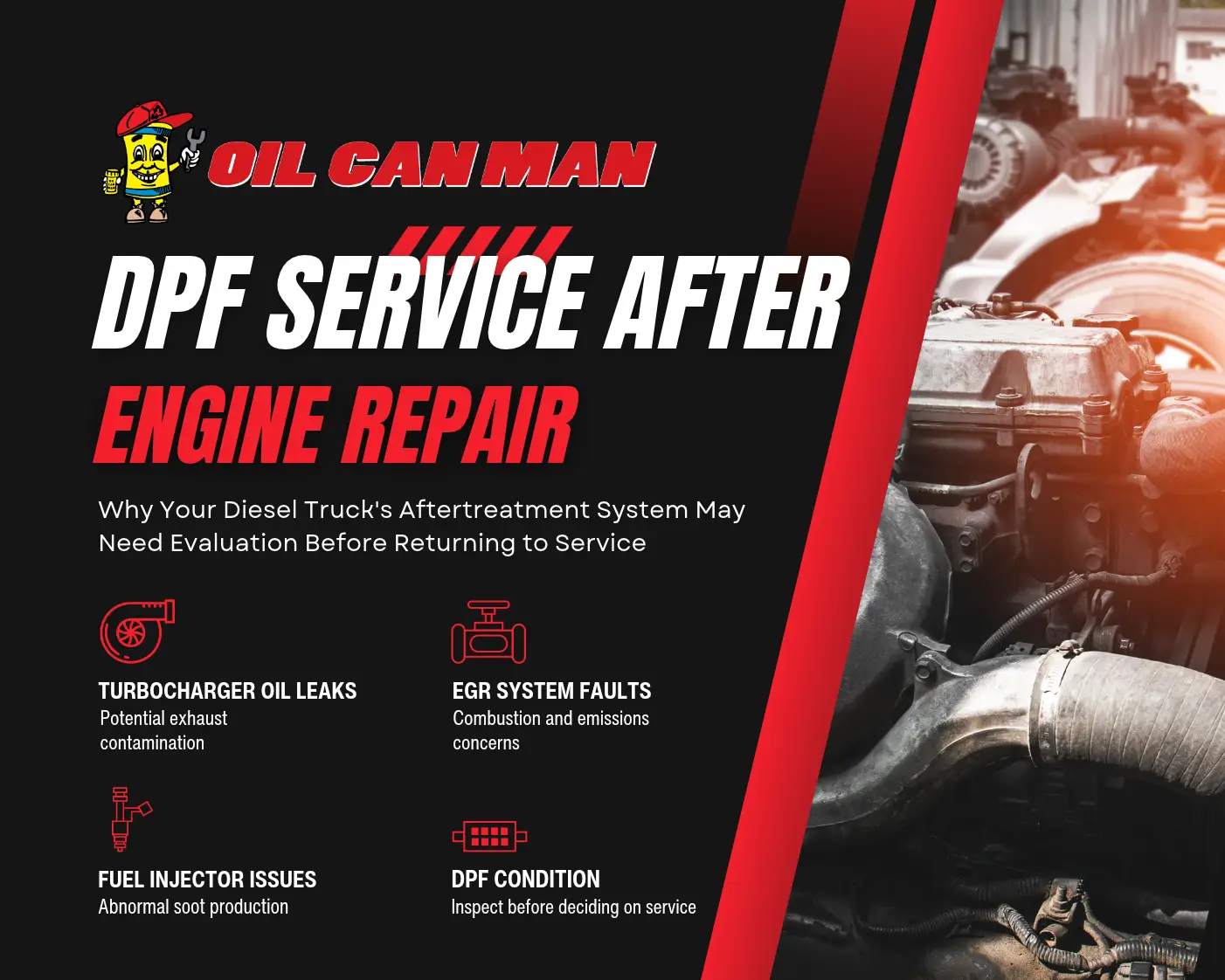
1. Turbocharger Repairs
Turbocharger failures involving oil leakage may allow engine oil to enter the exhaust system.
When considering DPF cleaning after turbo repair, technicians should determine whether contamination reached the filter and whether it remains serviceable.
A repaired turbocharger does not prove that the DPF is damaged. Likewise, replacing the turbocharger does not automatically remove contamination already present in the exhaust system.
2. Fuel Injector Repairs
Faulty injectors may affect combustion and contribute to abnormal soot production.
Following injector repairs, technicians may need to review fault information, engine operation, and DPF restriction data to determine whether additional service is necessary.
3. EGR System Repairs
Problems involving the exhaust gas recirculation (EGR) system can affect combustion and engine emissions.
When EGR-related faults have contributed to abnormal soot production, further aftertreatment evaluation may be appropriate.
4. Engine Oil or Coolant-Related Repairs
Excessive oil consumption or coolant entering the exhaust can create concerns beyond the original engine repair.
Detroit’s aftertreatment service guidance identifies heavy oil residue, coolant contamination, and damaged filter substrates as conditions requiring particular attention.
Cleaning or replacement decisions must follow the applicable manufacturer’s instructions.
Review Diagnostic Findings After Engine Repair
Before scheduling additional DPF work, fleet managers should request documentation of the completed engine repair.
Useful questions include:
- Was the original engine problem fully resolved?
- Were active and stored fault codes reviewed?
- Was the DPF exposed to excessive soot, oil, fuel, or coolant?
- Were exhaust pressure and temperature readings evaluated where appropriate?
- Is further diesel emissions system inspection recommended?
- Does the manufacturer require any post-repair verification?
Qualified diesel truck aftertreatment diagnostics may include reviewing engine data, regeneration history, DPF restriction, relevant sensors, and evidence of filter contamination.
A warning light alone should not determine whether a filter is cleaned or replaced.
02 / AFTERTREATMENT SERVICE
Still Getting DPF Warnings After Engine Repairs?
Recurring warnings, suspected oil contamination, or unusual filter restriction need proper evaluation. Oil Can Man can help you discuss suitable diesel diagnostics and determine whether mobile or shop-based DPF service is appropriate.
TRUCK MODEL / REPAIR HISTORY / WARNING CODES / LOCATION
NEXT STEP
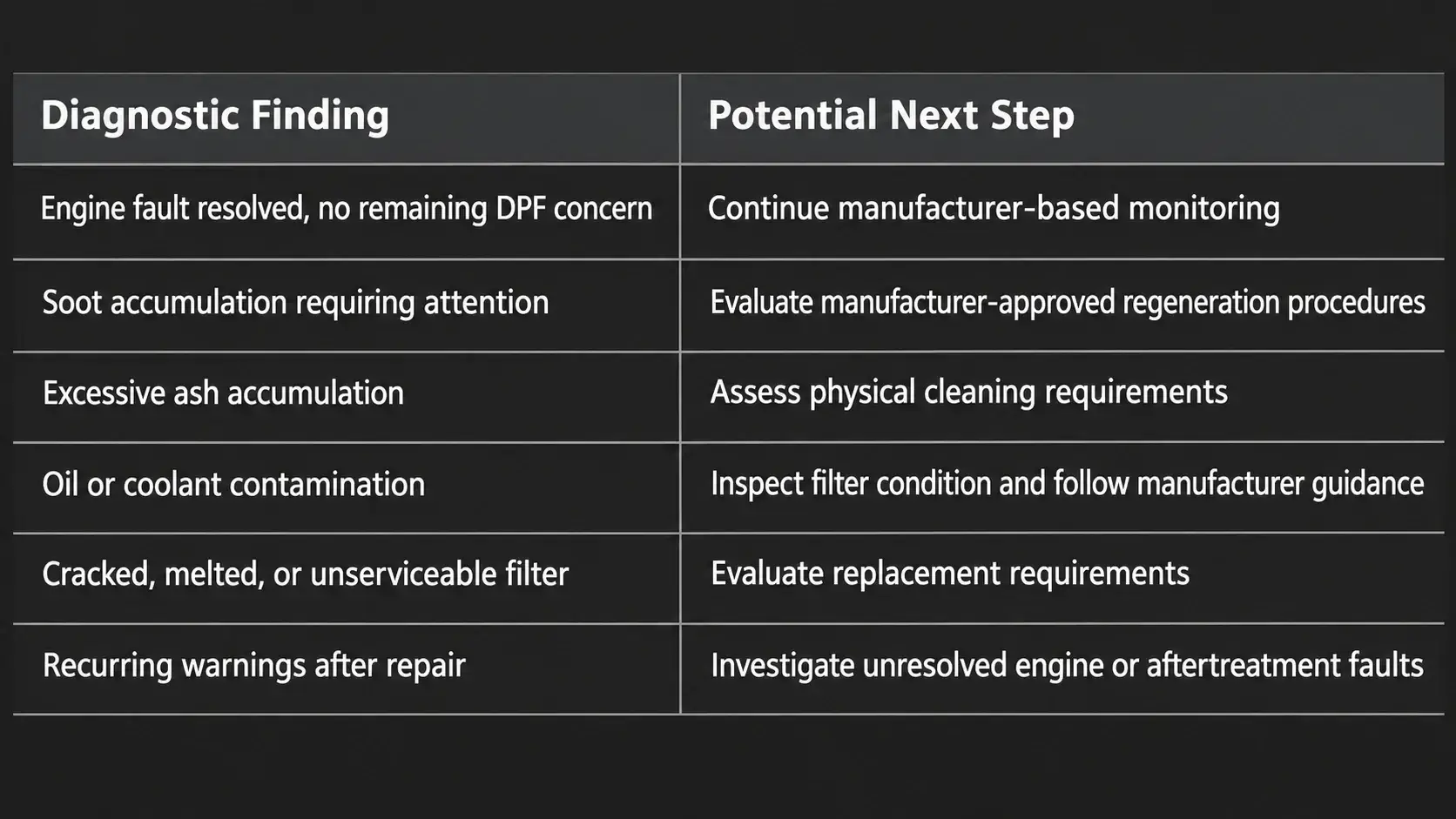
Determine Whether Cleaning or Additional Service Is Needed
Not every post-repair DPF concern requires the same procedure.
Regeneration, Cleaning, and Replacement Are Different
Regeneration burns accumulated combustible soot. Passive regeneration occurs during suitable operating conditions, while active or parked regeneration uses additional heat or controlled procedures.
Physical DPF cleaning removes accumulated noncombustible ash through an appropriate cleaning process.
DPF replacement may be necessary when damage or contamination makes the filter unsuitable for continued use.
Cummins’ DPF guidance describes restriction testing and manufacturer-specific maintenance considerations.
A forced regeneration should not be attempted solely because an engine repair has been completed, especially when contamination or unresolved faults are suspected.
For more information, review Oil Can Man’s guide to repeated DPF regeneration problems.
Coordinate Mobile or Facility-Based DPF Service
For commercial truck DPF maintenance, the service location depends on the required procedure.
Mobile diagnostics or suitable maintenance may be practical at a fleet yard when safe access, equipment, and manufacturer procedures permit.
Facility-based service may be more appropriate when filter removal, specialized cleaning equipment, extensive repairs, or detailed component inspection is required.
Oil Can Man provides mobile fleet support and has a Fort Lauderdale repair facility for work requiring shop resources.
Its guide to mobile versus shop DPF service explains additional factors that fleet managers should consider.
DPF Concerns After Turbo Repair
A trucking company has a commercial diesel truck that recently experienced a turbocharger failure involving an oil leak.
After replacing the damaged turbocharger and correcting the cause, the maintenance manager requests a review of the aftertreatment system.
The technician examines the repair documentation, relevant fault information, and evidence of possible DPF contamination.
If the filter is serviceable and no additional procedure is required, the maintenance manager documents the results and follows the manufacturer’s maintenance program.
If contamination or damage is discovered, the technician evaluates the appropriate cleaning or replacement requirements.
The fleet manager does not assume the filter needs replacement simply because the turbocharger failed.
Post-Repair DPF Evaluation Checklist
Before returning a diesel truck to its regular operating schedule, confirm:
- Engine repair: Original fault and corrective work are documented.
- Fault history: Relevant diagnostic codes and warning messages have been reviewed.
- Filter condition: Possible soot accumulation, ash loading, and contamination have been evaluated where indicated.
- Aftertreatment components: Applicable sensors and related systems have been assessed.
- Service recommendation: Any regeneration, cleaning, or replacement requirements are documented.
- Operating status: Remaining warnings, restrictions, and required verification checks have been addressed according to manufacturer instructions.
Keep the findings with the vehicle’s maintenance records for future DPF service planning.
Frequently Asked Questions
Does a DPF need cleaning after every diesel engine repair?
No. Cleaning depends on diagnostic results, filter condition, and manufacturer requirements. An engine repair does not automatically create a DPF cleaning requirement.
Can a failed turbocharger damage a DPF?
Yes, certain turbocharger failures can introduce oil into the exhaust and potentially affect the filter. Inspection is needed to determine whether contamination or damage occurred.
Will DPF cleaning fix an unresolved injector or EGR problem?
No. DPF cleaning does not repair faulty injectors, EGR components, or unrelated engine problems. The underlying fault must be diagnosed and corrected separately.
Can post-engine-repair DPF service be performed on-site?
Some diagnostic and maintenance procedures may be suitable for mobile service. Physical cleaning, filter removal, or specialized repair may require facility-based equipment.