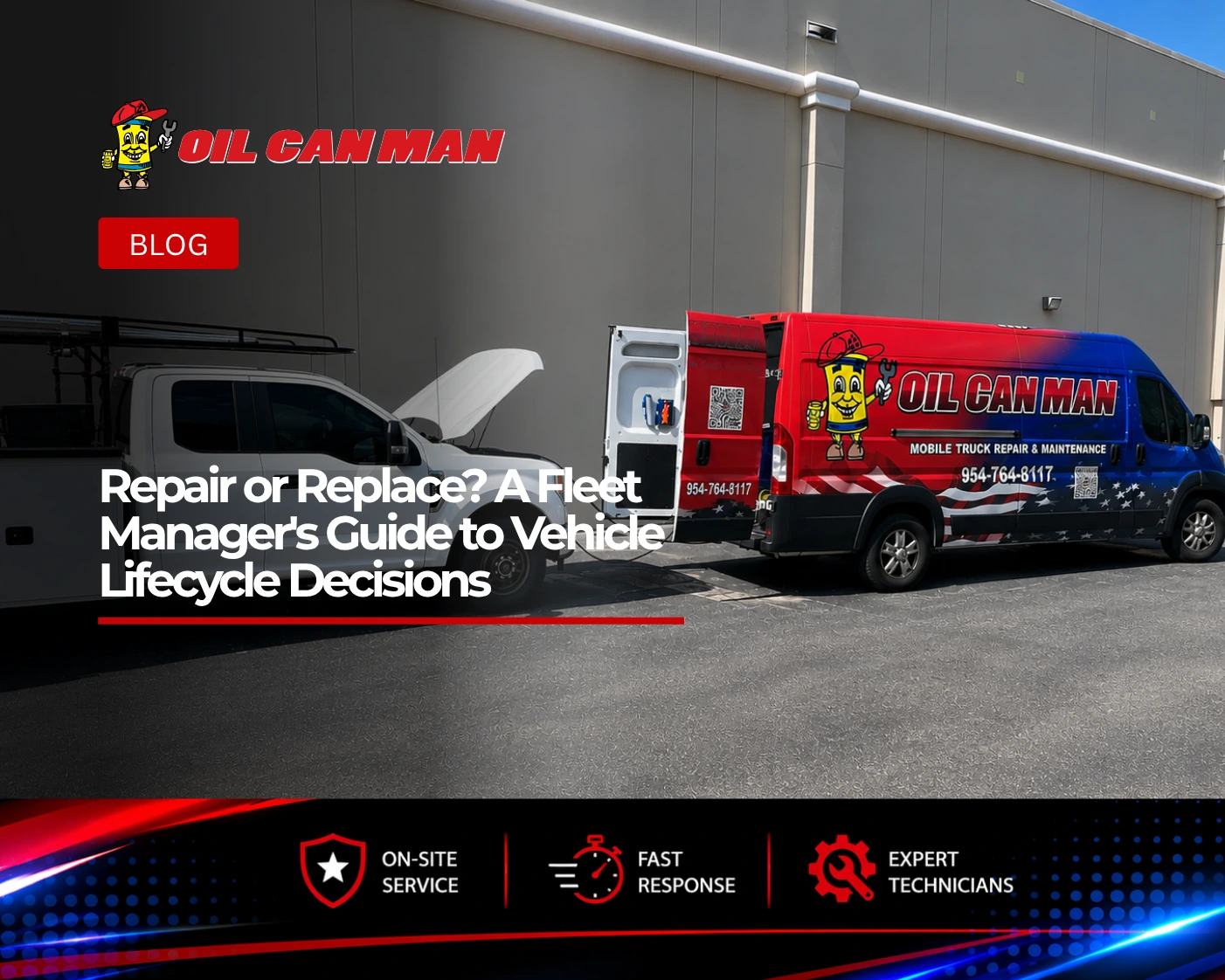
Making Smarter Fleet Lifecycle Decisions
Every commercial fleet vehicle eventually reaches a point where maintenance costs, downtime, and declining reliability begin to outweigh its value. Knowing when to repair a vehicle and when to replace it is one of the most important financial decisions a fleet manager can make. Replacing a vehicle too early can tie up capital that could be invested elsewhere, while delaying replacement too long can lead to frequent breakdowns, higher repair bills, missed service appointments, and reduced productivity.
A well-planned fleet vehicle replacement strategy helps businesses make data-driven decisions based on vehicle condition, maintenance history, utilization, downtime, and total cost of ownership rather than age or mileage alone. By evaluating these factors together, fleet managers can maximize vehicle lifespan while avoiding unnecessary operating expenses.
Oil Can Man helps commercial fleets throughout Fort Lauderdale, Miami, Palm Beach, and South Florida reduce downtime through fleet maintenance services, preventive maintenance, inspections, and repair solutions. With detailed service records and proactive maintenance planning, businesses can make more confident repair-or-replace decisions while keeping their fleets productive.
Why Repair-or-Replace Decisions Matter
Every vehicle has both a physical lifespan and an economic lifespan. While a truck or service van may still be operational, recurring repairs, declining fuel efficiency, extended downtime, and increasing maintenance costs can significantly reduce its value to the business.
The true cost of keeping an aging vehicle extends beyond replacement parts and labor. Fleet managers should also account for:
- Lost productivity due to unexpected downtime
- Missed customer appointments
- Driver delays
- Increased fuel consumption
- Safety concerns
- Compliance risks
- Declining resale value
These hidden costs often exceed the price of individual repairs, making it essential to evaluate the overall financial impact rather than focusing solely on repair invoices.
Businesses that rely on delivery vans, contractor trucks, utility vehicles, commercial fleets, or heavy equipment benefit from proactive maintenance strategies that minimize unexpected failures and improve long-term budgeting.
What Is a Fleet Vehicle Replacement Strategy?
A fleet vehicle replacement strategy is a structured approach for determining when to repair, retire, or replace commercial vehicles based on measurable performance data.
Rather than relying only on age or mileage, effective lifecycle planning evaluates:
- Vehicle age and mileage
- Repair frequency
- Annual maintenance costs
- Downtime history
- Vehicle utilization
- Driver feedback
- Safety inspections
- Depreciation
- Resale value
- Total cost of ownership
Using these metrics helps businesses make objective financial decisions while reducing unexpected expenses and improving fleet reliability.
Preventive maintenance plays a critical role in this process. Businesses that maintain accurate service records through routine inspections and fleet maintenance services are better equipped to identify performance trends before costly failures occur.
Key Factors to Evaluate Before Repairing or Replacing a Fleet Vehicle
Maintenance and Repair Costs
One expensive repair doesn’t necessarily justify replacing a vehicle. However, repeated repairs affecting critical systems often indicate that the vehicle’s economic lifespan is nearing its end.
Common warning signs include recurring:
- Brake repairs
- Suspension issues
- Hydraulic system failures
- Transmission problems
- Steering repairs
- Tire wear
- Cooling system failures
Tracking maintenance trends over time provides valuable insight into whether repair costs are continuing to increase.
Oil Can Man supports commercial fleets with services including hydraulic repair, brake service, tire maintenance, front-end repairs, and preventive inspections that help businesses monitor vehicle health and reduce unexpected failures.
Downtime Often Costs More Than Repairs
The cost of a repair extends beyond labor and replacement parts.
A delivery truck sitting in the repair shop cannot complete deliveries. A contractor’s vehicle may delay an entire project. Service companies may miss appointments, affecting customer satisfaction and revenue.
For many businesses, downtime represents the largest hidden maintenance expense.
Mobile maintenance services help minimize these disruptions by bringing qualified technicians directly to fleet locations. Instead of transporting vehicles to a repair facility, businesses can complete routine maintenance with minimal interruption to daily operations.
Oil Can Man’s mobile fleet maintenance solutions help South Florida businesses maximize uptime while reducing scheduling disruptions.
Vehicle Age, Mileage, and Daily Utilization
Although age and mileage remain important indicators, they should never be the sole factors in vehicle replacement decisions.
A well-maintained service truck with moderate mileage may continue operating reliably for years, while a high-mileage delivery vehicle exposed to heavy traffic and demanding schedules may require earlier replacement.
Fleet managers should evaluate:
- Daily operating hours
- Route conditions
- Payload requirements
- Driver usage
- Maintenance history
- Operating environment
Higher utilization generally accelerates component wear and increases maintenance demands.
Safety and Regulatory Compliance
Financial considerations are important, but safety should always remain a top priority.
As commercial vehicles age, components such as brakes, steering systems, suspension, tires, lighting, and hydraulic equipment become more susceptible to wear. These issues can increase accident risk, reduce reliability, and create compliance concerns.
Fleet managers should also remain familiar with FMCSA inspection, repair, and maintenance requirements and 49 CFR Part 396 maintenance regulations when evaluating whether a vehicle remains safe for continued service.
Routine preventive maintenance and inspections help identify safety concerns before they result in costly repairs or regulatory violations.
Depreciation, Resale Value, and Total Cost of Ownership
Waiting too long to replace a fleet vehicle can reduce its resale value and increase overall operating expenses. While delaying replacement may appear to save money in the short term, frequent repairs, rising maintenance costs, and lost productivity often outweigh the benefits of extending a vehicle’s service life.
Rather than focusing solely on repair costs, fleet managers should evaluate the total cost of ownership (TCO), which includes:
- Purchase and financing costs
- Fuel consumption
- Insurance premiums
- Scheduled maintenance
- Unexpected repairs
- Downtime
- Depreciation
- Resale value
Resources such as the AFLEET Total Cost of Ownership Tool and the Alternative Fuels Data Center Fleet Tools can help businesses compare long-term operating costs and make more informed replacement decisions.
Warning Signs It’s Time to Replace a Fleet Vehicle
While every fleet is different, several warning signs indicate a vehicle may be approaching the end of its economic life.
Watch for:
- Repair costs increasing year after year
- Recurring failures involving the same components
- Frequent unplanned downtime
- Declining fuel efficiency
- Difficulty sourcing replacement parts
- Repeated inspection failures
- Ongoing driver complaints about performance or safety
When multiple issues occur simultaneously, replacing the vehicle is often more cost-effective than continuing to invest in repairs.
When Repairing Still Makes Financial Sense
Replacement isn’t always the right solution. If a vehicle remains structurally sound, has a strong maintenance history, and repair costs are reasonable compared to its value, continuing to repair it may provide the best return on investment.
Routine services such as oil changes, brake inspections, tire rotations, fluid checks, and preventive maintenance often extend vehicle life while delaying unnecessary capital expenditures.
Oil Can Man supports this proactive approach through fleet maintenance services, trailer repair, and mobile fleet maintenance that help businesses maximize vehicle reliability and reduce long-term ownership costs.
How Preventive Maintenance Extends Vehicle Life
Preventive maintenance is one of the most effective ways to postpone unnecessary vehicle replacement.
Regular inspections help identify small issues before they develop into major repairs, reducing emergency breakdowns while improving fleet reliability.
A comprehensive preventive maintenance program typically includes:
- Oil and filter changes
- Brake inspections
- Tire rotations and replacements
- Fluid level checks
- Battery testing
- Hydraulic inspections
- Suspension evaluations
- DPF cleaning
- DOT inspection preparation
Businesses can further improve maintenance planning by using annual repair forecasting to anticipate future repair needs, reduce seasonal disruptions, and better manage fleet maintenance budgets.
Using Maintenance Data to Make Better Decisions
Accurate maintenance records are essential for effective fleet lifecycle management.
Tracking service history allows fleet managers to identify high-cost vehicles, monitor repair trends, forecast replacement budgets, and make informed repair-or-replace decisions based on measurable performance rather than assumptions.
Useful metrics include:
- Cost per vehicle
- Cost per mile
- Downtime hours
- Repair frequency
- Preventive maintenance compliance
- Major component failures
- Inspection history
When combined with routine inspections, this data helps businesses maximize asset utilization while reducing unnecessary operating costs.
If a vehicle experiences an unexpected breakdown, 24/7 roadside fleet repair support helps minimize downtime and get vehicles back on the road as quickly as possible.
Build a Smarter Fleet Replacement Strategy with Oil Can Man
Deciding whether to repair or replace a fleet vehicle is about more than fixing today’s problem—it’s about protecting your business from tomorrow’s costs. By evaluating maintenance history, downtime, utilization, safety, and total cost of ownership, businesses can make smarter lifecycle decisions that improve productivity and control operating expenses.
Whether you manage delivery vans, contractor trucks, utility vehicles, trailers, or commercial fleets, Oil Can Man provides the preventive maintenance, mobile fleet service, and repair expertise needed to keep your vehicles operating safely and efficiently.
Ready to reduce downtime and maximize the value of your fleet? Explore our fleet maintenance services or contact Oil Can Man to develop a proactive maintenance strategy that supports long-term fleet performance.
Frequently Asked Questions
How do I know when it’s time to replace a fleet vehicle?
Review maintenance costs, repair frequency, downtime, safety concerns, utilization, and total cost of ownership. When repair expenses and lost productivity consistently outweigh the vehicle’s value, replacement is often the better long-term investment.
Can preventive maintenance delay vehicle replacement?
Yes. Routine inspections, oil changes, brake service, tire maintenance, hydraulic inspections, and scheduled preventive maintenance help identify problems early, extending vehicle life and reducing unexpected repair costs.
Why is total cost of ownership important for fleet management?
Total cost of ownership provides a complete picture of a vehicle’s financial impact by considering maintenance, fuel, depreciation, downtime, insurance, and resale value instead of focusing only on repair expenses.