The Next Rental Is Booked, but Is the Telehandler Ready?
A telehandler returns from a construction site with a hydraulic leak, while another machine is scheduled for delivery tomorrow. The rental manager now has to review equipment condition, confirm maintenance requirements, and decide whether the next assignment can proceed. Releasing equipment without resolving a safety-related concern can create bigger problems for both the rental company and its customer.
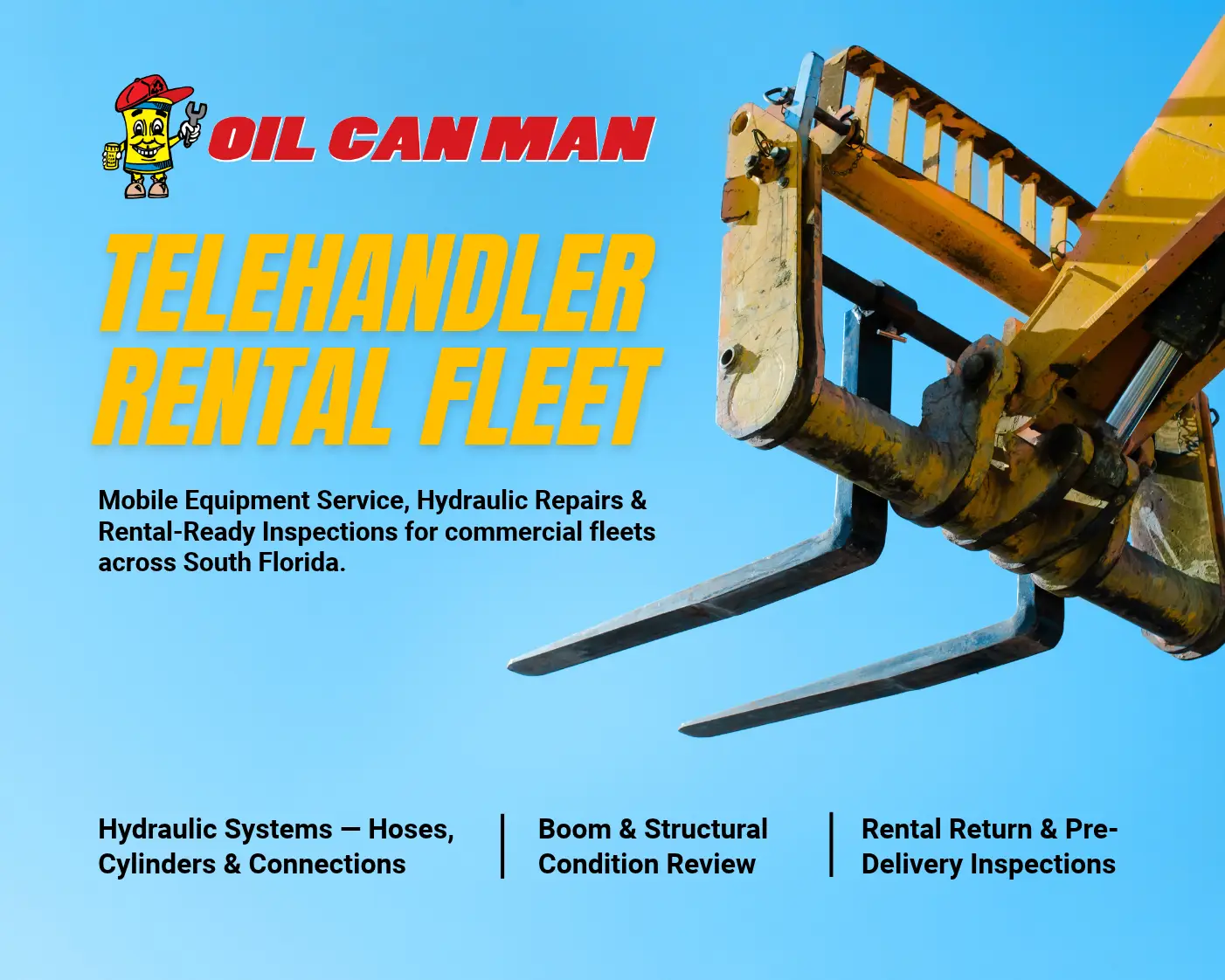
Mobile telehandler maintenance can support this process when suitable inspections or repairs can be arranged at a rental yard or customer location. Oil Can Man offers mobile fleet maintenance and hydraulic repair for commercial equipment across South Florida. Rental managers should confirm the specific telehandler model and required work before scheduling service.
OCM / FLEET OPERATIONS
01 / RENTAL TURNOVER
Next Rental Booked. Maintenance Still Pending?
Hydraulic concerns, overdue service, or unresolved defects can interrupt rental turnover. Discuss suitable telehandler maintenance options before the next assignment.
Why Rental Telehandlers Need Documented Maintenance Reviews
Telehandlers move between customers, construction sites, and operating conditions. A machine returning from one rental may have different wear, damage, or service requirements from another with similar engine hours.
Effective telehandler rental fleet maintenance begins with documented equipment condition and service history.
A useful rental turnover process includes three separate stages:
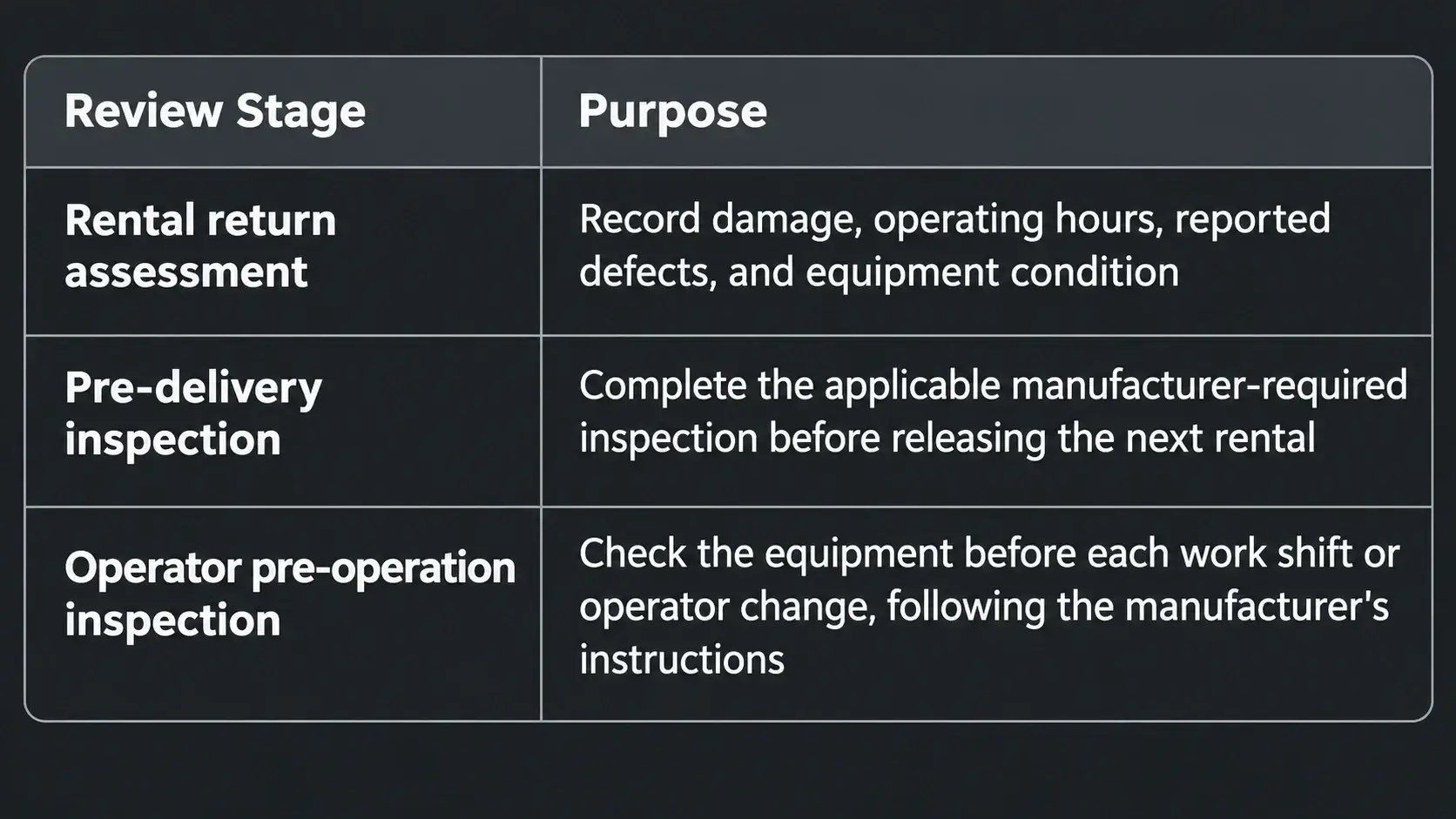
These stages serve different purposes. A rental return assessment does not replace a qualified pre-delivery inspection or the operator’s pre-shift responsibilities.
JLG’s telehandler inspection resources provide model-specific inspection forms that rental companies can incorporate into their maintenance procedures.
Inspect Equipment Condition After Each Rental
A rental telehandler inspection should begin with the reported condition of the machine and any changes observed during the rental period.
Boom, Hydraulics, and Structural Components
Review visible boom wear, hydraulic connections, cylinders, hoses, and structural components for reported damage or abnormal conditions.
Hydraulic leaks, unusual boom movement, or damaged components require evaluation before the equipment returns to service.
Oil Can Man’s hydraulic repair services include maintenance and repairs for heavy equipment, with mobile service where appropriate.
Tires, Engine, and Electrical Systems
Rental return assessments should also document tire damage, fluid concerns, warning indicators, electrical faults, and reported engine performance changes.
These observations help qualified maintenance personnel determine what requires inspection, testing, or repair.
Forks, Attachments, and Safety Information
Confirm the returned attachments match the rental agreement and inspect their visible condition.
Check that the correct operator manuals, attachment information, and capacity charts are present.
Genie’s telehandler inspection guidance identifies hydraulic components, tires, boom wear pads, safety indicators, and attachments among important inspection areas.
Equipment with unresolved safety-related defects should remain unavailable for rental until appropriately evaluated and corrected.
Compare Engine Hours With Manufacturer Service Requirements
Two telehandlers showing the same engine-hour reading may have different maintenance needs.
Operating conditions, loads, previous repairs, and equipment configuration can influence service requirements.
Before scheduling telehandler service between rentals, compare:
- Current engine hours and manufacturer service requirements
- Previous preventive maintenance and repair records
- Operating conditions from the completed rental
- Reported defects and outstanding work orders
- Attachment configuration and applicable service documentation
Do not apply one universal maintenance interval to every telehandler.
JLG’s pre-operation inspection guidance emphasizes following the machine’s specific manuals and increasing inspection attention when operating conditions are demanding.
Coordinate Mobile Repairs and Rental Fleet Availability
When several machines return together, rental managers should prioritize equipment with safety-related defects, unresolved faults, and upcoming manufacturer-required maintenance.
On-site equipment rental maintenance may be practical when machines are safely accessible, and the work can be performed using appropriate tools and procedures.
Accessible hydraulic concerns or suitable preventive maintenance may be candidates for mobile service. Major structural repairs, extensive disassembly, or specialized equipment requirements may call for facility-based work.
For rental businesses considering telescopic forklift rental fleet repair, the diagnosis and machine configuration should determine the service approach, not the next rental date.
02 / EQUIPMENT SERVICE
Hydraulic Issue Holding Up Your Next Rental?
Unresolved leaks, warning indicators, and service requirements need a qualified review before equipment is reassigned. Oil Can Man can discuss appropriate mobile or shop-based maintenance options.
MODEL / ENGINE HOURS / SYMPTOMS / LOCATION
NEXT STEP
Managing 15 Rental Telehandlers
Consider a South Florida rental company operating 15 telehandlers.
During a scheduling review, the maintenance manager identifies two machines with unresolved hydraulic concerns, four approaching manufacturer-indicated maintenance, and nine requiring routine rental-return assessments.
Rather than treating every machine as ready for the next rental, the manager separates the units according to their inspection and service requirements.
The machines with unresolved concerns remain unavailable pending evaluation. Scheduled maintenance is organized according to manufacturer guidance, while the remaining equipment completes its appropriate return and pre-delivery processes.
This approach helps the rental company make equipment availability decisions using documented conditions rather than rental reservations alone.
Telehandler Rental Return Maintenance Checklist
Before approving another rental assignment, the maintenance team should confirm:
- Equipment identification, model, serial number, and engine hours
- Rental return condition and customer-reported issues
- Visible boom, hydraulic, tire, and structural concerns
- Fork and attachment condition, compatibility, and documentation
- Manufacturer maintenance and inspection requirements
- Outstanding repairs, approvals, and qualified inspection results
- Next rental date and equipment availability status
This checklist supports maintenance coordination but does not replace the manufacturer’s inspection procedures.
For construction applications, OSHA’s material handling equipment requirements also address applicable equipment capacity, modifications, and safe operation requirements.
Frequently Asked Questions
How often should rental telehandlers be inspected?
Follow the manufacturer’s required pre-operation, pre-delivery, and periodic inspection procedures. Rental companies should also document equipment condition after returns to identify damage or unresolved service needs.
Can telehandler maintenance be performed at a rental yard?
Some maintenance and repairs may be suitable for mobile service when the machine, work area, technician qualifications, and required equipment permit. Confirm the model-specific service scope.
What should rental companies check after equipment returns?
Review operating hours, reported problems, visible damage, hydraulic components, tires, attachments, maintenance records, and outstanding service requirements.
When should a telehandler remain unavailable for rental?
Equipment with unresolved safety-related defects, required inspections, or other conditions preventing safe operation should remain unavailable until appropriately evaluated and corrected.