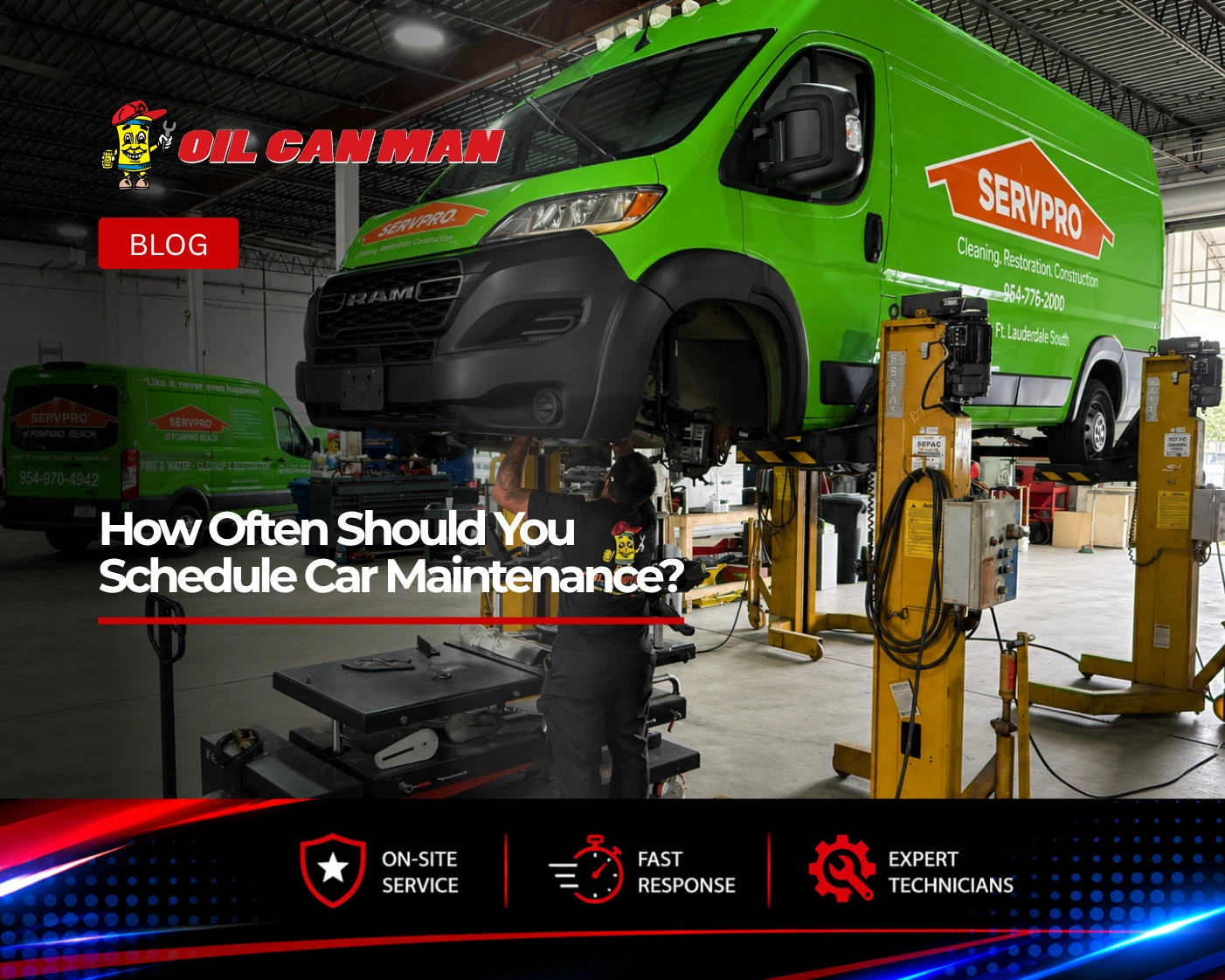
A Practical Schedule Car Maintenance Timeline for Safer, More Reliable Vehicles
Scheduling car maintenance is one of the most effective ways to reduce repair costs, improve reliability, and avoid unexpected breakdowns. Yet many drivers and fleet owners delay service until they notice unusual noises, dashboard warning lights, or declining performance. By then, a simple scheduled car maintenance task may have developed into a much more expensive repair.
Whether you own a personal vehicle or manage a fleet of delivery vans, service trucks, utility vehicles, or commercial equipment, following a consistent car maintenance schedule helps protect your investment while keeping vehicles safe and dependable. Regular maintenance reduces wear on major components, improves fuel efficiency, extends vehicle life, and minimizes costly downtime that can disrupt business operations.
The best maintenance schedule depends on your vehicle’s manufacturer recommendations, mileage, age, driving habits, and operating conditions. AAA recommends using your owner’s manual as the primary guide for a manufacturer-recommended maintenance schedule because every vehicle has unique service requirements.
For drivers and businesses throughout Fort Lauderdale, Miami, Palm Beach, and South Florida, Oil Can Man makes preventive maintenance more convenient with on-site service that helps keep vehicles operating at peak performance while reducing interruptions to your schedule.
Why Scheduling Car Maintenance Matters
Preventive maintenance isn’t simply about replacing worn parts—it’s about preventing problems before they affect safety, productivity, and your budget.
For personal vehicles, routine maintenance improves reliability and helps avoid inconvenient breakdowns. For businesses, a structured vehicle maintenance schedule is an essential part of fleet management. Every unexpected breakdown can delay deliveries, interrupt service calls, reduce employee productivity, and impact customer satisfaction.
Routine maintenance provides several long-term benefits:
- Reduces unexpected repairs
- Improves fuel efficiency
- Extends vehicle lifespan
- Enhances driver safety
- Improves vehicle reliability
- Helps control operating costs
- Supports compliance for commercial fleets
Businesses that rely on commercial vehicles also benefit from accurate maintenance records, scheduled inspections, and proactive repair planning, allowing fleet managers to make informed maintenance decisions instead of reacting to emergencies.
What Determines Your Maintenance Schedule?
No two vehicles experience the same level of wear. A commuter car driven primarily on highways has very different maintenance needs than a delivery van operating in heavy South Florida traffic or a construction truck carrying equipment every day.
Several factors influence how often you should schedule maintenance, including:
- Manufacturer recommendations
- Vehicle mileage
- Vehicle age
- Engine type
- Driving habits
- Commercial or personal use
- Towing or heavy payloads
- Climate and road conditions
- Daily operating hours
While general maintenance timelines provide helpful guidance, your owner’s manual should always remain the primary reference for scheduled service.
The AAA Vehicle Maintenance Checklist also offers an excellent vehicle maintenance checklist to help drivers understand common maintenance tasks based on mileage and time intervals.
Fleet operators often go a step further by monitoring engine hours, idle time, route conditions, and vehicle utilization. Rather than waiting for warning lights or breakdowns, many businesses implement structured preventive maintenance schedules that reduce downtime and improve long-term fleet performance.
Recommended Vehicle Maintenance Timeline
Every Month or Before Extended Trips
Monthly inspections require only a few minutes but can prevent expensive repairs later.
Drivers should routinely check:
- Tire pressure
- Tire condition
- Engine oil level
- Coolant level
- Exterior lighting
- Windshield washer fluid
- Battery terminals
- Visible fluid leaks
- Unusual sounds or vibrations
For businesses operating across Fort Lauderdale, Miami, Palm Beach, and surrounding South Florida communities, these quick inspections help identify developing issues before they interrupt deliveries or scheduled service appointments.
Every 3,000–5,000 Miles
Although modern vehicles often extend oil change intervals, service requirements vary depending on engine design, oil type, manufacturer recommendations, and driving conditions.
Typical maintenance at this interval includes:
- Oil and filter replacement
- Fluid level inspection
- Tire pressure adjustment
- Visual brake inspection
- Belt and hose inspection
- General vehicle inspection
Oil Can Man provides convenient oil change and preventive maintenance services that help both individual drivers and fleet operators stay on schedule without unnecessary downtime. Mobile service is especially valuable for businesses managing multiple vehicles that need consistent maintenance without disrupting daily operations.
Every 5,000–7,500 Miles
As mileage increases, additional preventive services become important to maintain safety and performance.
These commonly include:
- Tire rotation
- Brake inspection
- Battery testing
- Air filter inspection
- Wiper blade inspection
- Steering and suspension evaluation
Regular tire rotations promote even tread wear while brake inspections identify worn components before they compromise stopping performance.
The National Highway Traffic Safety Administration also provides valuable information regarding vehicle safety and brake maintenance, emphasizing the importance of routine brake inspections as part of overall vehicle safety.
Every 15,000–30,000 Miles
As vehicles accumulate mileage, more comprehensive inspections become essential to maintain reliability and prevent costly repairs.
Maintenance at this stage typically includes:
- Engine air filter replacement
- Cabin air filter replacement
- Fuel system inspection
- Brake fluid inspection
- Cooling system inspection
- Wheel alignment inspection
- Suspension evaluation
These services help protect critical systems while improving vehicle performance, fuel economy, and driver comfort.
For commercial fleets, this is also an ideal time to review maintenance records. If a vehicle consistently experiences brake wear, tire replacements, or recurring repairs, it may be operating under severe-duty conditions and require more frequent service intervals.
Every 30,000–60,000 Miles
This mileage range often includes several major maintenance services that protect expensive vehicle components.
Common recommendations include:
- Transmission fluid service
- Spark plug inspection or replacement
- Coolant replacement
- Brake fluid replacement
- Differential fluid service (where applicable)
- Drive belt inspection
Delaying these services can increase the risk of transmission problems, overheating, reduced engine performance, and costly drivetrain repairs.
For businesses that rely on commercial vehicles every day, proactive maintenance helps prevent unexpected downtime that can disrupt operations and impact customer service.
Every 60,000–100,000 Miles
Higher-mileage vehicles benefit from detailed inspections that evaluate long-term component wear.
Depending on the manufacturer, maintenance may include:
- Timing belt or timing chain inspection
- Water pump inspection
- Major fluid replacement
- Suspension component inspection
- Steering system evaluation
- Engine performance diagnostics
Fleet managers should also evaluate whether each vehicle continues to provide good value. Reviewing fleet maintenance KPIs—such as repair frequency, downtime, maintenance costs, and cost per mile—helps determine whether continued maintenance or vehicle replacement is the better long-term investment.
Severe-Duty Driving Requires More Frequent Maintenance
Not every vehicle operates under normal driving conditions.
Many personal and commercial vehicles fall into the severe-duty category because of:
- Stop-and-go traffic
- Frequent short trips
- Heavy towing
- Large payloads
- Long idle times
- Construction site operation
- Dusty environments
- High temperatures
South Florida’s climate places additional stress on batteries, cooling systems, tires, and engine fluids. Delivery vehicles, contractor trucks, and utility fleets operating daily throughout Fort Lauderdale, Miami, and Palm Beach often require shorter maintenance intervals than vehicles driven primarily on highways.
Oil Can Man helps businesses develop maintenance schedules based on actual vehicle use rather than relying solely on standard mileage intervals.
Essential Maintenance Services You Should Never Skip
Routine maintenance protects every major vehicle system while helping reduce long-term operating costs.
Critical preventive services include:
- Oil changes
- Tire rotations
- Brake inspections
- Fluid inspections and replacement
- Battery testing
- Air filter replacement
- Transmission service
- Cooling system maintenance
Businesses managing multiple vehicles can simplify preventive care through Oil Can Man’s fleet service and on-site maintenance programs that reduce downtime while improving maintenance consistency.
Organizations evaluating long-term maintenance strategies may also benefit from comparing fleet maintenance outsourcing with in-house maintenance operations to determine the most efficient solution for their fleet.
DOT Compliance for Commercial Fleets
Commercial fleets often have additional maintenance and inspection responsibilities beyond standard manufacturer recommendations.
Fleet managers should maintain:
- Annual DOT inspections
- Driver Vehicle Inspection Reports (DVIRs)
- Maintenance records
- Repair documentation
- Brake inspection records
The FMCSA Commercial Vehicle Inspection, Repair, and Maintenance Regulations require motor carriers to inspect, repair, and maintain commercial vehicles while documenting required inspections.
Consistent preventive maintenance helps businesses improve compliance, reduce roadside violations, and keep vehicles safely operating.
Warning Signs That Require Immediate Service
Even with a scheduled maintenance program, certain warning signs should never be ignored.
Schedule service immediately if you notice:
- Dashboard warning lights
- Squealing or grinding brakes
- Fluid leaks
- Engine overheating
- Hard starting
- Poor fuel economy
- Excessive vibration
- Uneven tire wear
- Delayed transmission shifting
- Burning odors
Addressing these symptoms early often prevents significantly larger repairs later.
Stay on Schedule with Oil Can Man
Routine maintenance is one of the smartest investments drivers and fleet managers can make. A proactive maintenance schedule helps reduce repair costs, improve safety, extend vehicle life, and minimize costly downtime.
Whether you operate a personal vehicle, service van, delivery truck, utility fleet, or commercial operation, Oil Can Man provides convenient on-site maintenance solutions that keep vehicles operating reliably throughout South Florida.
From oil changes and brake service to DOT inspections, hydraulic repair, trailer repair, DPF cleaning, transmission service, and complete preventive maintenance services, our experienced team helps businesses simplify maintenance while maximizing fleet performance.
Ready to build a maintenance schedule that works for your vehicles? Visit the Oil Can Man contact page to schedule preventive maintenance and keep your vehicles running safely, efficiently, and reliably.
Frequently Asked Questions
How often should I schedule car maintenance?
Follow your vehicle manufacturer’s recommendations while considering mileage, vehicle age, driving habits, and operating conditions. Commercial vehicles and severe-duty applications often require more frequent maintenance.
What services are included in preventive maintenance?
Preventive maintenance commonly includes oil changes, tire rotations, brake inspections, fluid services, battery testing, air filter replacement, transmission service, cooling system maintenance, and routine vehicle inspections.
Why do fleet vehicles require a different maintenance schedule?
Commercial vehicles typically experience higher mileage, heavier loads, longer operating hours, and more demanding driving conditions than personal vehicles. A structured preventive maintenance program helps reduce downtime, improve reliability, support DOT compliance, and extend vehicle lifespan.