Why Liftgate Failure Becomes a Fleet Problem Fast
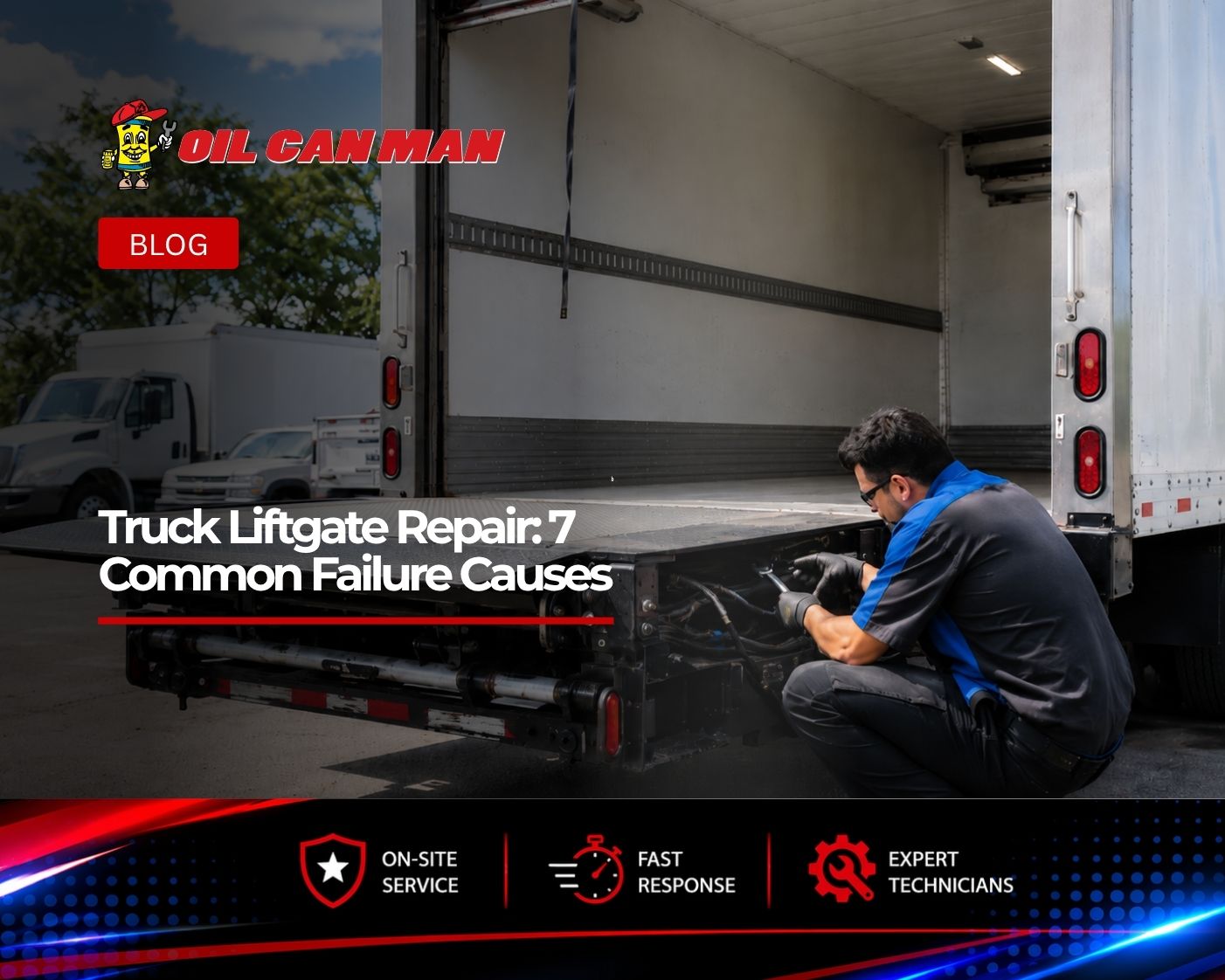
A liftgate that will not raise, lower, hold position, or operate consistently can take a delivery truck out of productive service even when the truck still runs. For delivery, beverage, rental, and field-service fleets, truck liftgate repair affects loading time, route completion, driver productivity, and whether a vehicle can safely handle assigned work.
Oil Can Man provides mobile fleet maintenance and commercial vehicle repair across South Florida, including liftgate-related hydraulic and electrical service. A proper truck liftgate repair starts by identifying whether the fault is electrical, hydraulic, mechanical, or load-related before choosing mobile or facility-based service.
7 Common Causes of Truck Liftgate Failure
1. Weak Batteries or Charging Problems
Liftgates depend on the vehicle electrical system to power the motor and hydraulic pump. A weak battery, poor charging condition, or loose battery connection can leave a liftgate slow, intermittent, or unresponsive. Maxon’s operating guidance recommends checking that the battery is fully charged and terminals are clean and tight during routine operating checks.
When the service request says liftgate not working, voltage supply should be considered before assuming the hydraulic system has failed.
2. Blown Fuses, Tripped Breakers, or Damaged Controls
A silent liftgate may have an electrical interruption rather than a failed pump. Anthony Liftgates troubleshooting guidance identifies tripped circuit breakers, blown control fuses, disabled cutoff switches, and control-circuit faults among possible reasons a liftgate motor will not run.
Drivers should report whether the control is dead, intermittent, or responsive in only one direction.
3. Corroded Wiring, Loose Grounds, or Damaged Cables
Commercial trucks operate around heat, rain, road spray, vibration, and frequent stops. Connections can loosen or corrode, while cables and insulation can be damaged. Anthony Liftgates lists loose or corroded electrical connections as a possible cause when the motor will not run.
Liftgate motor repair should begin with diagnosis rather than immediate motor replacement.
4. Low Hydraulic Fluid, Leaking Hoses, or Cylinder Problems
When the motor runs but the platform does not rise normally, the problem may be hydraulic. Low fluid, a liftgate hydraulic leak, damaged hoses, leaking cylinders, or internal seal problems can reduce lifting performance or allow the platform to drift down. Manufacturer troubleshooting materials identify low hydraulic fluid, valve issues, cylinder seal problems, and cylinder leakage among possible causes of these symptoms.
Oil Can Man’s hydraulic repair services cover commercial hydraulic systems, including hoses, pumps, and cylinders. Proper hydraulic liftgate repair requires finding the source of pressure or fluid loss rather than treating every slow liftgate as the same failure.
If your fleet has a liftgate that leaks, drifts, or loses lifting force, Oil Can Man can evaluate whether mobile repair or facility-based service is appropriate.
5. Pump, Motor, Solenoid, or Valve Failure
The motor, pump, start solenoid, and hydraulic valves work together. A failed solenoid can prevent motor operation, while a malfunctioning valve can affect raising, lowering, or load holding. Pump or hydraulic-system problems can also produce weak or inconsistent movement.
Because similar symptoms can come from different components, liftgate motor repair requires diagnosis.
6. Binding Pivots, Tracks, Chains, or Misalignment
Dirt, corrosion, poor lubrication, worn bushings, damaged rollers, misaligned tracks, or binding pivot points can cause slow or uneven movement. Tommy Gate’s Standard Railgate maintenance guidance notes that dry or contaminated rail surfaces can cause hanging, shuddering, and uneven platform movement.
Grinding, scraping, unusual noises, jerking, or visible structural damage are reasons to stop using the liftgate and have it inspected.
7. Overloading or Poor Load Placement
Every liftgate has a rated capacity and load-placement requirements. Exceeding that rating or positioning heavy cargo incorrectly can overload components and create unsafe operation. Manufacturer guidance directs operators to center loads and position heavier loads appropriately for the platform design.
Repeated overload events can contribute to box truck liftgate problems, even if the gate appears to recover afterward.
Electrical vs. Hydraulic Liftgate Problems
Symptoms can narrow the system to inspect, but they do not confirm a diagnosis.
- Electrical clues: no motor sound, intermittent controls, blown fuses, tripped breakers, or visibly corroded terminals.
- Hydraulic clues: the motor runs but the platform will not lift normally, a visible liftgate hydraulic leak, cylinder leakage, drifting under load, or inconsistent movement.
- Mechanical clues: binding, crooked movement, damaged tracks, worn pivots, unusual noises, or visible structural damage.
Safe Checks Drivers Can Make
Drivers can make visual and operational checks without opening hydraulic lines or attempting electrical repairs. Maxon’s daily guidance includes checking battery connections, controls, visible leaks, hoses, cylinders, structural components, and platform movement. It advises taking the liftgate out of operation when service or repair is needed.
A useful liftgate not working report should note the symptom, whether the motor runs, visible fluid, uneven movement, and the load on the platform when the issue occurred.
Preventive Maintenance for South Florida Rain and Salt
There is no universal liftgate service interval. The schedule depends on manufacturer guidance, liftgate model, cycle count, environment, load history, and vehicle use.
For example, Tommy Gate recommends service for certain Standard Railgate models every 120 days or 1,500 cycles, whichever comes first. Its TKL owner’s manual assigns monthly checks to items such as hoses, cylinders, and hydraulic oil, with some electrical items checked on longer intervals. Fleets should follow the manual for the exact model.
For trucks exposed to frequent rain, coastal conditions, grime, or salt, add closer attention to cleaning, corrosion, electrical connections, lubrication points, hoses, and exposed metal. Tommy Gate guidance specifically calls for removing road salt, while manufacturer lubrication guidance emphasizes servicing critical rotational points at the prescribed intervals.
Preventive Liftgate Checklist
For delivery, beverage, rental, and service fleets, routine checks should include:
- Battery charge and clean terminals
- Controls, switches, wiring, and connections
- Hydraulic fluid level and visible leaks
- Hoses, cylinders, and fittings
- Pivots, bushings, chains, or tracks
- Platform alignment and structural condition
- Unusual noise or uneven movement
- Load-rating labels and operator awareness
Oil Can Man’s fleet service can help integrate liftgate checks into broader preventive maintenance planning.
Hypothetical Fleet Example: Three Symptoms, Three Priorities
Consider a delivery company with three box trucks. Truck A has no liftgate motor sound. Truck B runs but raises slowly and shows fluid near a hose. Truck C operates but binds and moves unevenly.
Truck A may need electrical diagnosis. Truck B may need hydraulic liftgate repair and leak inspection. Truck C may have a lubrication, alignment, wear, or structural issue. The fleet manager should not treat all three as identical truck liftgate repair jobs.
Accessible electrical and hydraulic problems may be suitable for mobile service, while major structural work or extensive disassembly may require a facility. Oil Can Man’s mobile fleet service includes liftgate-related hydraulic lines, pumps, and electrical controls. Its guide to hydraulic cylinder repair versus replacement supports decisions when cylinder damage is involved.
Keep Your Box Trucks Ready to Load and Unload
Recurring box truck liftgate problems should be addressed before they become a route disruption or unsafe loading condition. Oil Can Man provides mobile fleet maintenance and commercial vehicle repair across its South Florida service area, with facility-based service available in Fort Lauderdale.
Call Oil Can Man at (954) 764-8117 to describe the truck, liftgate model, symptoms, and operating conditions and discuss the appropriate truck liftgate repair approach for your fleet.
FAQs
What causes a truck liftgate to stop working?
Common causes include weak battery power, blown fuses, damaged switches, corroded wiring, hydraulic-fluid loss, leaking hoses or cylinders, pump or valve problems, mechanical binding, and improper loading. The symptom alone does not confirm which component has failed.
How can I tell whether a liftgate problem is electrical or hydraulic?
No motor operation may point toward the electrical circuit, controls, battery supply, fuse, breaker, or solenoid. If the motor runs but the platform does not raise properly, hydraulic fluid, valves, cylinders, or related components may need inspection. Professional diagnosis is still important because symptoms can overlap.
How often should a commercial truck liftgate be serviced?
Use the schedule specified for the liftgate model. For example, Tommy Gate recommends every 120 days or 1,500 cycles for certain Standard Railgate models, while other models have monthly and quarterly inspection items. High-use or corrosive operating environments may justify more frequent checks and cleaning.
Can mobile service handle hydraulic liftgate repair?
Many accessible hydraulic and electrical liftgate problems may be suitable for mobile diagnosis or repair. Structural damage, extensive disassembly, or work requiring specialized facility equipment may be better suited to a repair shop. Oil Can Man currently includes liftgate-related hydraulic lines, pumps, and electrical controls within its broader fleet-service capabilities.