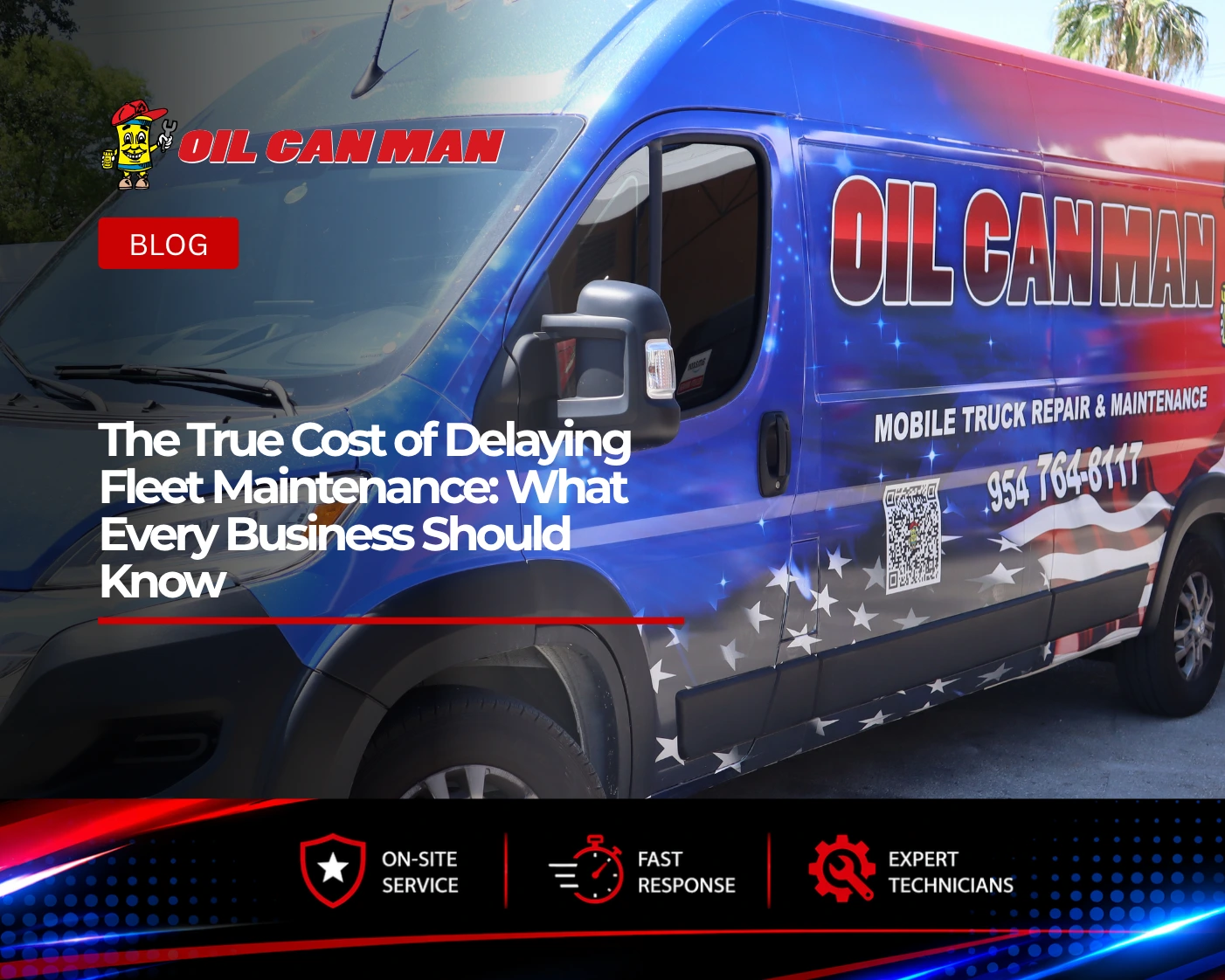
Why Delayed Fleet Maintenance Costs More Than You Think
Every commercial fleet depends on reliable vehicles to keep operations running smoothly. Whether your business manages delivery vans, service trucks, utility vehicles, construction equipment, or municipal fleets, every vehicle contributes to productivity, customer satisfaction, and profitability. While delaying routine maintenance may seem like a way to save time or reduce short-term expenses, the long-term costs can be far greater than most businesses expect.
A missed oil change, overdue inspection, or ignored warning light can quickly develop into a major mechanical failure. The result is often unexpected downtime, expensive repairs, missed customer appointments, safety concerns, and compliance issues that affect your bottom line.
For businesses throughout Fort Lauderdale, Miami, Palm Beach, and South Florida, maintaining dependable vehicles is essential for staying competitive. Oil Can Man helps fleet operators reduce downtime with proactive maintenance, mobile fleet service, inspections, and repair solutions tailored to commercial operations. Through a structured fleet service program, businesses can identify small problems early, improve vehicle reliability, and avoid costly disruptions before they occur.
Why Businesses Delay Fleet Maintenance
Tight Schedules and Limited Vehicle Availability
Many businesses rely on every vehicle in their fleet each day. Delivery companies need trucks on the road, contractors need service vehicles at active job sites, and utility providers require dependable response vehicles for emergency calls.
Because removing a vehicle from service can temporarily reduce productivity, routine maintenance is often postponed until a more convenient time. Unfortunately, delaying scheduled service usually creates greater disruption later when an unexpected breakdown forces the vehicle out of operation for much longer.
Planning maintenance in advance minimizes interruptions while helping businesses avoid emergency repairs that can derail daily operations.
Short-Term Budget Pressures
Some fleet managers delay maintenance to reduce immediate expenses, especially when budgets are tight. Oil changes, brake inspections, tire service, fluid replacements, and minor repairs may appear optional when vehicles continue operating without obvious problems.
However, small maintenance issues rarely remain small.
For example, repairing a minor fluid leak early is typically inexpensive. Left unresolved, the same issue can damage major components such as the engine, transmission, or hydraulic system, resulting in significantly higher repair costs and extended downtime.
Preventive maintenance protects both fleet reliability and long-term operating budgets by addressing problems before they become major failures.
Reactive Instead of Preventive Maintenance
Without a structured maintenance schedule, service often becomes reactive rather than proactive. Vehicles are serviced only after warning lights appear, drivers report performance issues, or breakdowns occur.
Reactive maintenance creates inconsistent service records, missed inspections, and unpredictable repair costs.
Businesses that implement scheduled maintenance programs benefit from better planning, more accurate maintenance records, and improved fleet performance over time. Oil Can Man works with commercial fleets to develop maintenance schedules that align with vehicle usage, operating conditions, and manufacturer recommendations.
The Hidden Costs of Delayed Fleet Maintenance
Increased Fleet Downtime
Downtime is often the most expensive consequence of delayed maintenance.
When a commercial vehicle is unavailable, the financial impact extends far beyond the repair invoice. Deliveries may be delayed, technicians may miss appointments, projects can fall behind schedule, and managers may need to rearrange routes or rent replacement vehicles.
For example, one disabled delivery truck may affect dozens of scheduled customer stops in a single day. A contractor with an out-of-service service vehicle may lose an entire day’s productivity because employees cannot access the equipment they need.
Reducing downtime starts with consistent maintenance planning and routine inspections.
Higher Repair Costs
Minor maintenance issues become progressively more expensive when ignored.
Common examples include:
- Low fluid levels damaging major components
- Worn brake pads causing rotor damage
- Tire problems affecting suspension performance
- Small hydraulic leaks leading to costly system failures
- Dirty filters reducing engine efficiency
Routine inspections allow technicians to identify these problems before they require emergency repairs.
Businesses that follow a structured maintenance strategy often experience fewer breakdowns, lower repair costs, and greater operational reliability. Tracking maintenance intervals through a consistent fleet maintenance planning process also helps identify recurring issues before they affect overall fleet performance.
Reduced Fuel Efficiency
Vehicle maintenance also has a direct impact on fuel consumption.
Dirty air filters, worn engine components, underinflated tires, aging fluids, and poor engine performance all reduce fuel efficiency. While the increase in fuel usage may seem minor for a single vehicle, those costs multiply quickly across an entire commercial fleet.
Routine maintenance not only protects major vehicle systems but also helps businesses control fuel expenses while improving overall fleet efficiency.
Operational Problems Caused by Delayed Fleet Maintenance
Lost Productivity Across Your Business
The impact of delayed maintenance extends well beyond the vehicle itself. When a commercial truck or service van is unexpectedly out of service, employees, customers, and daily operations all feel the effects.
A delayed repair can lead to:
- Missed customer appointments
- Delayed deliveries
- Idle technicians waiting for replacement vehicles
- Overtime expenses
- Route disruptions
- Reduced revenue opportunities
For example, a plumbing company may lose an entire day of billable work if a service van breaks down before scheduled appointments. Likewise, a construction crew may be unable to complete a project if the truck carrying critical equipment is unavailable.
Maintaining dependable fleet vehicles helps businesses stay productive, meet customer expectations, and avoid unnecessary operational disruptions.
Scheduling Challenges Multiply Quickly
One unexpected breakdown rarely affects only one employee.
Fleet managers may need to reshuffle drivers, assign backup vehicles, delay deliveries, or rent temporary replacements to keep operations moving. These additional costs often exceed the original repair expense.
Businesses can reduce these disruptions by scheduling routine maintenance before problems develop. Oil Can Man’s mobile fleet maintenance services make preventive care more convenient by bringing professional service directly to your fleet, minimizing downtime and keeping vehicles in operation.
Safety Risks of Delaying Fleet Maintenance
Vehicle reliability is directly connected to workplace safety.
As maintenance is postponed, essential systems such as brakes, steering, suspension, tires, lighting, and hydraulic components become more susceptible to failure. These issues increase the risk of accidents while placing drivers, employees, customers, and the public at greater risk.
The OSHA Motor Vehicle Safety Guide for Employers emphasizes the importance of maintaining work vehicles to reduce roadway hazards and improve employee safety.
Routine inspections help identify worn components before they compromise safe vehicle operation.
Driver Confidence Matters
Employees perform better when they trust the vehicles they operate.
Warning lights, unusual noises, steering problems, or braking concerns create unnecessary stress and distractions that affect driver confidence. Well-maintained vehicles provide greater reliability while supporting a safer and more productive work environment.
DOT Compliance Protects Your Business
For many commercial fleets, preventive maintenance also plays an important role in regulatory compliance.
Poorly maintained vehicles are more likely to fail inspections, receive citations, or be placed out of service, resulting in costly delays and lost productivity.
Fleet managers should understand the FMCSA Inspection, Repair, and Maintenance Regulations and follow a structured maintenance program to help keep vehicles compliant.
Maintaining accurate service documentation is equally important. Detailed maintenance records support compliance while helping businesses identify recurring repair trends and make informed maintenance decisions.
The FMCSA Commercial Vehicle Inspection and Maintenance Guidance provides additional resources for businesses managing regulated commercial fleets.
Real-World Examples of Deferred Maintenance Costs
The consequences of delayed maintenance vary by industry, but the financial impact is consistently significant.
- Delivery companies risk missed routes, delayed shipments, and dissatisfied customers.
- Construction firms may lose valuable jobsite productivity when equipment or service vehicles become unavailable.
- Utility providers depend on reliable fleets to respond quickly to outages and emergency service requests.
- HVAC, plumbing, and electrical contractors rely on dependable service vehicles to complete scheduled appointments and maintain customer satisfaction.
- Municipal fleets require reliable vehicles to support essential public services without interruption.
Regardless of industry, proactive fleet maintenance improves reliability while helping businesses avoid avoidable downtime.
How Preventive Fleet Maintenance Saves Money
Preventive maintenance is one of the most effective ways to control long-term fleet operating costs.
Routine service helps businesses:
- Identify small issues before they become major repairs
- Reduce emergency breakdowns
- Improve vehicle reliability
- Extend vehicle lifespan
- Lower fuel consumption
- Reduce emergency repair expenses
- Improve maintenance planning
Businesses evaluating long-term maintenance strategies can also compare fleet maintenance outsourcing vs. an in-house fleet shop to determine the most efficient approach for their operation.
The U.S. Department of Energy’s Fleet Management Framework also provides valuable guidance for improving fleet lifecycle planning and asset management.
Why Mobile Fleet Maintenance Makes Preventive Care Easier
Traditional maintenance often requires transporting vehicles to a repair facility, resulting in additional travel time and lost productivity.
Mobile fleet maintenance brings professional service directly to your location, allowing businesses to complete scheduled maintenance with minimal disruption.
Benefits include:
- Reduced vehicle downtime
- Greater scheduling flexibility
- Improved maintenance consistency
- Less travel time
- Better fleet availability
Oil Can Man helps businesses throughout South Florida simplify preventive maintenance through convenient on-site fleet service tailored to each organization’s operational schedule.
Keep Your Fleet Moving with Oil Can Man
Delaying maintenance rarely saves money. Instead, it increases the likelihood of expensive repairs, unexpected downtime, reduced fuel efficiency, compliance issues, and lost productivity.
Oil Can Man helps businesses stay ahead of costly breakdowns through proactive maintenance, inspections, mobile fleet service, hydraulic repair, trailer repair, DPF cleaning, DOT inspection support, and complete fleet maintenance services.
Whether you operate a small service fleet or manage hundreds of commercial vehicles, our experienced team develops maintenance programs that improve reliability, reduce operating costs, and keep your fleet performing at its best.
Ready to reduce downtime and avoid costly repairs? Contact Oil Can Man to build a customized fleet maintenance strategy that keeps your business moving.
Frequently Asked Questions
How often should commercial fleet vehicles receive preventive maintenance?
Maintenance intervals depend on vehicle type, mileage, operating conditions, manufacturer recommendations, and regulatory requirements. Establishing a scheduled maintenance program helps ensure vehicles receive service before problems develop.
What is the highest cost of delaying fleet maintenance?
While repair costs increase over time, the largest expense is often lost productivity caused by vehicle downtime, missed customer appointments, emergency repairs, rental vehicles, and disrupted operations.
Is mobile fleet maintenance worth it?
Yes. Mobile fleet maintenance reduces downtime by servicing vehicles at your location, helping businesses maintain consistent maintenance schedules while minimizing operational disruptions.