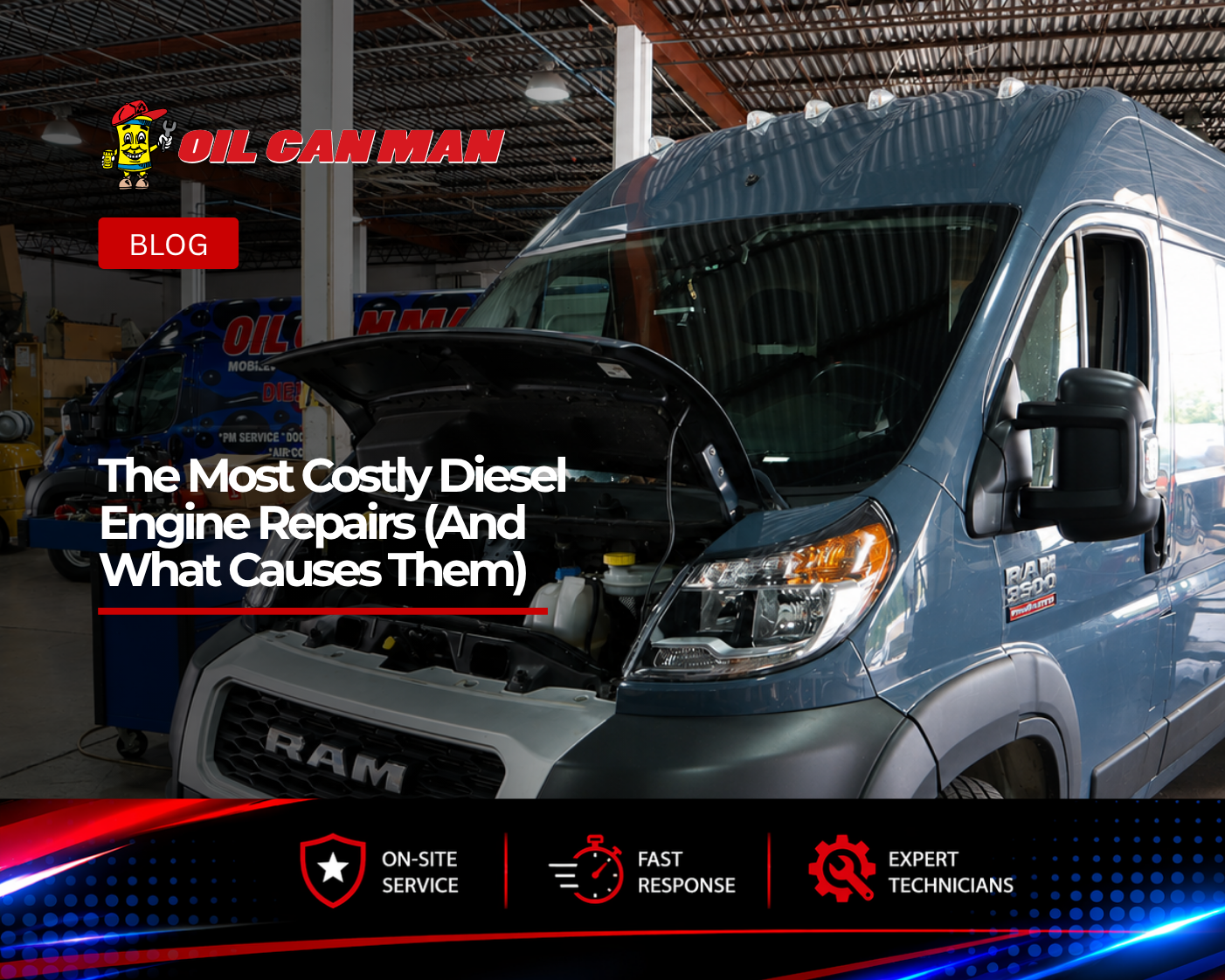
6 Most Expensive Diesel Engine Repairs: Causes & Warning Signs
The most expensive diesel engine repairs can take a commercial truck out of service and create significant costs for fleet operators. Major failures involving crankshafts, pistons, cylinder heads, fuel injection systems, and turbochargers often require specialized parts and extensive labor.
Many problems begin with warning signs such as low oil pressure, overheating, unusual engine noises, or reduced power.
Understanding the causes of costly diesel repairs can help fleet managers identify problems earlier and make informed maintenance decisions.
Need diesel engine service? Request a Repair Quote from Oil Can Man.
Which Diesel Engine Repairs Cost the Most?
Repair costs vary by engine model, extent of damage, replacement parts, and labor requirements. The following are six examples of potentially expensive repairs.
| Diesel repair | Common warning signs | Why repairs can be costly |
|---|---|---|
| Crankshaft and bearing repair | Knocking, low oil pressure | Extensive engine disassembly |
| Piston and cylinder repair | Low compression, excessive blow-by | Internal component replacement |
| Head gasket and cylinder head repair | Overheating, coolant loss | Cylinder head removal and inspection |
| Fuel injection system repair | Rough idle, hard starting | Precision components and fuel-system labor |
| Turbocharger replacement | Loss of power, unusual turbo noise | Turbo assembly and related component repairs |
| DPF and EGR system repair | Warning lights, reduced power | Diagnostics, cleaning, or component replacement |
These are examples, not a fixed cost ranking. Final expenses depend on the truck and diagnostic findings.
1. Crankshaft and Engine Bearing Failure
Crankshaft and bearing damage can be among the most serious diesel engine failures because repairs may require extensive internal engine work.
Common causes:
- Low oil pressure or insufficient lubrication
- Contaminated or degraded engine oil
- Oil pump or lubrication-system problems
- Continued operation after warning signs
Warning signs: Deep engine knocking, oil pressure warnings, metallic particles in oil, or unusual vibrations.
When bearings are severely damaged, a technician may need to inspect the crankshaft and other internal components to determine whether repair, rebuilding, or replacement is appropriate.
Prevention tip: Follow engine-specific oil service intervals and investigate low oil pressure immediately.
2. Piston and Cylinder Damage
Damaged pistons and cylinder walls can lead to poor engine performance, oil consumption, and expensive internal repairs.
Common causes:
- Engine overheating
- Inadequate lubrication
- Injector malfunction or excessive fueling
- Foreign material entering the cylinders
Warning signs: Loss of compression, excessive crankcase blow-by, increased oil consumption, or abnormal engine noises.
Severe damage may require engine disassembly and replacement or machining of affected parts.
Prevention tip: Address overheating, lubrication problems, and abnormal injector operation before additional damage develops.
3. Head Gasket and Cylinder Head Failure
Diesel engines operate under demanding temperatures and pressures. Cooling system problems can contribute to head gasket damage or cylinder head distortion.
Common causes:
- Coolant leaks
- Failed water pumps
- Restricted cooling systems
- Repeated overheating
Warning signs: Unexplained coolant loss, overheating, coolant contamination, or white exhaust vapor associated with coolant entering the combustion system.
Repairs may involve removing the cylinder head, inspecting sealing surfaces, and checking for cracks or distortion.
Prevention tip: Monitor coolant levels, inspect hoses and radiators, and investigate recurring temperature warnings.
4. High-Pressure Fuel Injection System Failure
Modern diesel injection systems operate at high pressure and depend on properly filtered, clean fuel.
Common causes:
- Water or debris in diesel fuel
- Fuel pump damage
- Restricted fuel filters
- Worn or malfunctioning injectors
Warning signs: Hard starting, rough idle, reduced power, excessive exhaust smoke, or inconsistent engine performance.
Depending on the failure, repairs may involve replacing injectors, fuel pumps, lines, or other contaminated components.
A damaged high-pressure fuel pump can increase repair complexity when debris spreads through the fuel system.
Prevention tip: Follow manufacturer-recommended fuel filter maintenance and investigate possible fuel contamination promptly.
5. Turbocharger Failure
Turbochargers help diesel engines produce power efficiently, particularly under demanding operating conditions.
Common causes:
- Insufficient oil supply
- Oil contamination
- Foreign-object damage
- Excessive heat or abnormal operating conditions
Warning signs: Reduced acceleration, unusual turbocharger noise, increased oil consumption, or abnormal exhaust smoke.
Replacing a turbocharger can be costly, particularly when related oil lines, intake components, or other engine systems also require repair.
Not every loss-of-power complaint indicates a failed turbocharger. Diagnostic testing is necessary to identify the cause.
Prevention tip: Maintain the engine’s lubrication and air filtration systems and inspect suspected boost or oil leaks.
6. DPF and EGR System Repairs
Diesel particulate filters (DPFs) and exhaust gas recirculation (EGR) systems are emissions-related components rather than internal engine parts, but they can create substantial repair expenses for diesel fleets.
Common causes:
- Excessive soot accumulation
- Interrupted or incomplete regeneration
- Failed sensors or EGR components
- Underlying fuel, intake, or combustion problems
Warning signs: Check-engine lights, DPF warnings, reduced power, engine derating, or repeated regeneration requests.
A clogged DPF does not always require replacement. Depending on the condition, professional cleaning may be appropriate. Failed components or severe filter damage may require additional repair.
Prevention tip: Diagnose the cause of recurring DPF or EGR problems instead of repeatedly addressing the warning light alone.
Learn more about Oil Can Man’s on-site DPF cleaning and service.
What Makes Diesel Engine Repairs So Expensive?
The cost of diesel engine repairs depends on more than the price of one replacement part.
Major factors include:
- Repair complexity: Internal engine work may require extensive disassembly.
- Parts: Engine-specific injectors, turbochargers, or other assemblies can be expensive.
- Labor: Specialized diagnostics, removal, rebuilding, and installation increase costs.
- Related damage: One failed component may damage additional systems.
- Fleet downtime: An unavailable truck can disrupt deliveries, schedules, and operations.
The most accurate way to estimate repair costs is to identify the underlying failure and inspect the affected components.
Diesel Engine Warning Signs You Should Never Ignore
Fleet managers and drivers should report these symptoms promptly:
| Warning sign | Possible concern |
|---|---|
| Low oil pressure | Lubrication problems or internal engine wear |
| Repeated overheating | Cooling system or internal engine faults |
| Loud knocking | Possible internal mechanical damage |
| Excessive exhaust smoke | Fuel, air, lubrication, or combustion issues |
| Sudden loss of power | Fuel, turbocharger, engine, or emissions-system faults |
| Unexplained coolant or oil loss | Leaks or internal component problems |
These symptoms are not definitive diagnoses.
If a truck develops a critical oil-pressure warning, severe overheating, or loud mechanical knocking, stop operating it as soon as it is safe to do so and arrange professional assistance. Continuing to drive could increase engine damage.
How to Prevent Costly Diesel Engine Repairs
Not every diesel engine failure is preventable, but consistent maintenance can reduce avoidable risks.
Follow Manufacturer Maintenance Intervals
Schedule oil changes, filter replacements, fluid checks, and inspections according to the engine manufacturer’s recommendations and operating conditions.
Oil Can Man offers mobile oil changes and preventive maintenance for commercial fleets.
Monitor Engine Performance
Track recurring warning lights, unusual noises, coolant loss, and changes in engine performance. Maintenance records can help technicians identify developing problems.
Keep Fuel and Lubrication Systems Maintained
Use the correct lubricants and fuel filters specified for the engine. Investigate contaminated fuel, abnormal oil consumption, and fluid leaks.
Address Cooling Problems Early
Overheating should not become a routine operating condition. Cooling system inspections can help identify leaks, restrictions, or failing components.
Schedule Fleet Inspections
Preventive inspections and documented maintenance can help fleet managers address mechanical concerns before they result in unplanned downtime.
Explore Oil Can Man’s mobile fleet maintenance services for commercial trucks and business fleets.
Should You Repair, Rebuild, or Replace a Diesel Engine?
A major engine problem does not automatically mean the entire engine requires replacement.
| Option | When it may make sense |
|---|---|
| Repair | Damage is limited to serviceable components, and the rest of the engine remains in acceptable condition. |
| Rebuild | Multiple internal components need attention, but the engine is a suitable candidate for rebuilding. |
| Replace | Damage is extensive, rebuilding is impractical, or replacement offers a better operational and financial outcome. |
Fleet managers should consider repair costs, vehicle condition, expected remaining service life, parts availability, and downtime before choosing an approach.
Professional diagnostics are essential to making an informed decision.
Diesel Engine Repair and Fleet Maintenance in South Florida
Oil Can Man provides commercial vehicle repair and fleet maintenance services throughout Broward, Miami-Dade, and Palm Beach counties.
Services include engine and powertrain repairs, oil changes, preventive maintenance, and DPF cleaning.
Depending on the vehicle and repair requirements, work may be performed through mobile service or at Oil Can Man’s Fort Lauderdale repair facility.
For fleet operators managing multiple vehicles, scheduled maintenance can help identify developing mechanical issues and improve repair planning.
Frequently Asked Questions About Diesel Engine Repairs
What is the most expensive diesel engine repair?
Extensive internal engine damage involving crankshafts, bearings, pistons, or cylinders can be among the most expensive repairs because it may require major disassembly, rebuilding, or engine replacement.
How much does it cost to repair a diesel engine?
Costs depend on the engine, failed components, parts availability, labor, and extent of damage. Minor component repairs and complete engine rebuilds involve very different costs, so a diagnosis is needed for an accurate estimate.
Can preventive maintenance help avoid expensive diesel repairs?
Regular maintenance can reduce the risk of some failures by addressing lubrication, cooling, fuel filtration, and other developing problems. However, it cannot eliminate every mechanical failure.
Is it better to rebuild or replace a diesel engine?
The best option depends on the condition of the engine, rebuild costs, replacement availability, vehicle age, and expected downtime. A qualified technician should evaluate the damage before recommending a solution.
Can diesel engine repairs be performed on-site?
Some diesel repairs and maintenance services can be performed on-site. Major internal engine work may require specialized equipment and an adequately equipped repair facility.
Schedule Diesel Engine Service With Oil Can Man
The most expensive diesel engine repairs often involve extensive component damage, specialized labor, and prolonged downtime.
Monitoring warning signs and maintaining commercial vehicles can help fleet managers make repairs before problems escalate.
Oil Can Man supports South Florida businesses with mobile fleet maintenance and in-shop commercial vehicle repairs.
Concerned about engine performance, recurring warning lights, or an overdue inspection?
Call (954) 764-8117 to discuss your commercial vehicle or fleet service needs.