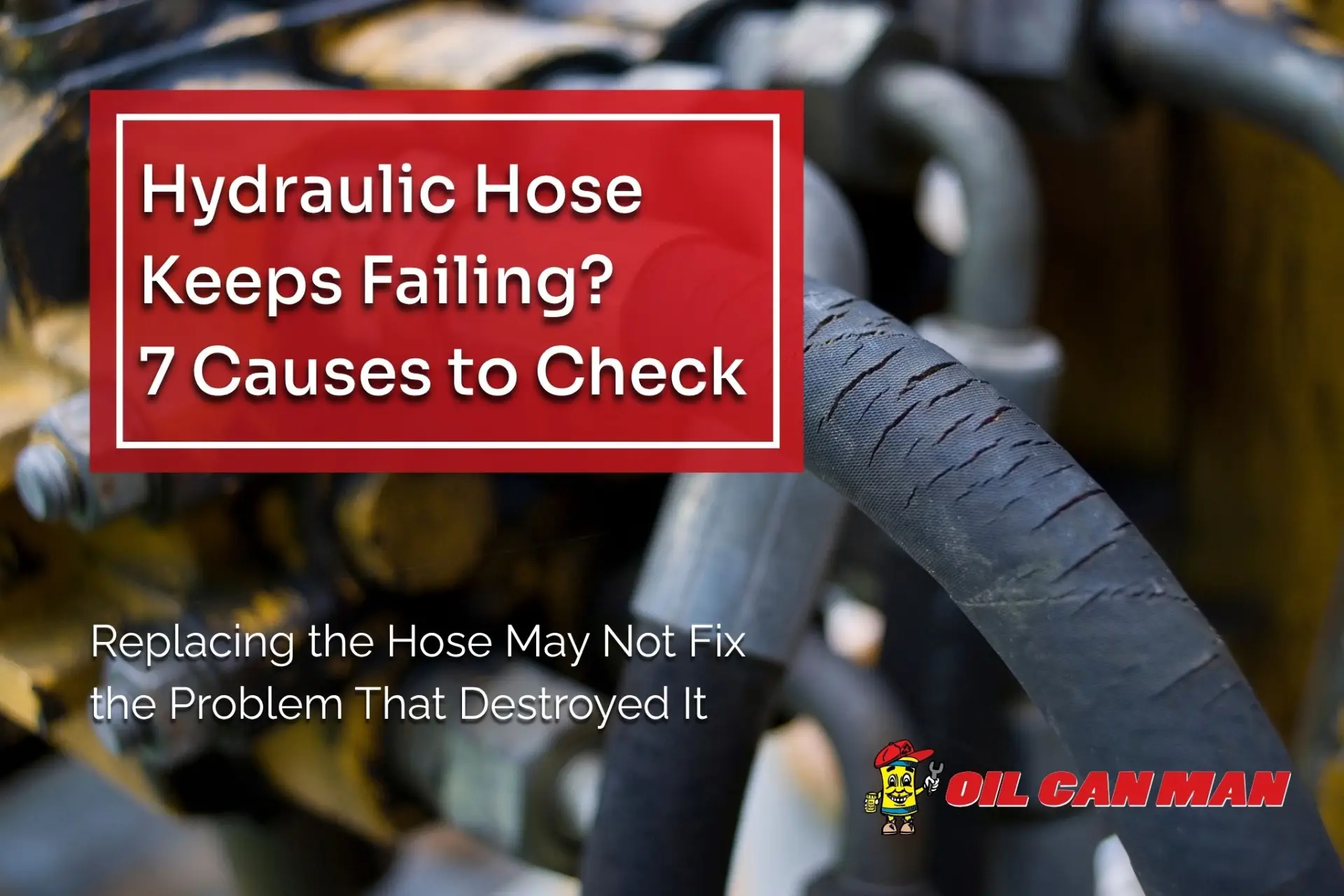
Replacing the Hose May Not Fix the Problem That Destroyed It
A hydraulic hose fails on a liftgate, forklift, dump truck, trailer, or work truck. The hose gets replaced, the equipment goes back into service, and then the same line leaks or bursts again. At that point, the next hydraulic hose failure should be treated as a diagnostic clue, not simply another hose replacement.
For South Florida fleet managers, repeated failures can disrupt routes, loading operations, job-site work, and equipment availability. Oil Can Man’s hydraulic repair services currently include mobile service for hoses, pumps, cylinders, and hydraulic systems on trucks, forklifts, trailers, and heavy equipment, with facility-based repair available when the work requires it. Oil Can Man
The important question is not just, “Which hose failed?” It is, “What operating condition caused this hose to fail here?”
Why a Hydraulic Hose Keeps Failing in the Same Application
Hydraulic hoses operate within specific limits for pressure, temperature, fluid compatibility, bend radius, routing, and movement. Replacing a failed assembly without checking those conditions can leave the cause unchanged.
Parker’s technical guidance notes that excessive bending, twisting, improper assembly, and tube erosion can contribute to hose problems, while Danfoss emphasizes correct bend radius, protection from abrasion, proper routing, and avoiding hose twist during equipment movement. Review Parker’s hose-performance guidance.
For fleet managers, the failure pattern and equipment history matter almost as much as the failed hose itself.
1. Abrasion and Poor Hose Routing
One of the first things to investigate is where the hose was rubbing.
A hose routed against a frame rail, bracket, another hose, sharp edge, or moving component can gradually lose its protective cover. Once the reinforcement is damaged or exposed, the assembly may become more vulnerable to failure.
Warning patterns may include:
- Wear concentrated on one side
- Scuffing at a consistent contact point
- Exposed reinforcement
- Damage near a clamp or bracket
- Repeated failures in the same physical location
Danfoss specifically recommends routing and supporting hoses to prevent rubbing and abrasion, especially where machinery movement can cause repeated contact.
Replacing an abraded hose without correcting its routing can expose the new hose to the same condition.
2. Excessive Bend or Hose Twist
A hydraulic hose needs enough space to flex within the manufacturer’s specified bend limits.
A bend that is too tight can stress the hose construction, restrict flow, or concentrate loads near the fitting. Twisting can also load the reinforcement in a way the hose was not designed to handle.
Parker notes that routing or assembly twist can damage a hose and reduce its pressure capability, while exceeding minimum bend radius can contribute to premature assembly failure.
If a hydraulic hose keeps failing close to a fitting or at the same bend, technicians should evaluate hose length, routing, movement, fitting orientation, and the manufacturer’s bend-radius requirements instead of assuming the replacement hose itself was defective.
3. Pressure Spikes or an Incorrect Hose Specification
A system’s normal operating pressure does not always tell the whole story.
Short-duration pressure events, system faults, incorrect relief settings, or an assembly that is not properly matched to the application’s pressure requirements can place additional stress on a hose.
A burst away from a visible abrasion point may justify checking:
- Actual system pressure
- Pressure spikes or unusual operating events
- Hose pressure rating
- Fittings and adapters
- Valve and relief-system behavior
- Whether the application has changed
This requires proper diagnostic equipment and qualified service. A fleet manager should document what the equipment was doing when the failure occurred rather than attempting to test a pressurized system personally.
4. Excessive Heat Exposure
Heat can affect both the hose material and the fluid moving through it.
Possible heat sources include:
- Exhaust components
- Engine compartments
- Hydraulic-system overheating
- Poor hose routing
- High ambient temperatures
- Continuous high-duty operation
Parker’s hose safety guidance identifies heat and other environmental exposure among conditions that can contribute to degradation and premature hose failure. See Parker’s hose safety guidance
A hardened, cracked, discolored, or unusually stiff hose may justify investigating temperature exposure rather than replacing the line and returning the equipment immediately to the same operating condition.
If the Same Hose Has Already Been Replaced More Than Once
A repeat hose replacement is a good point to widen the diagnosis.
Oil Can Man can evaluate the hose, fittings, routing, surrounding components, and hydraulic system at a South Florida fleet yard or job site when mobile service is appropriate. If repeated failure points toward a pressure, pump, valve, cylinder, contamination, or broader system problem, its hydraulic systems troubleshooting guide explains why the entire circuit may need evaluation rather than another isolated hose change.
5. Incorrect Hose or Fluid Compatibility
A replacement assembly needs to match the actual application.
Factors may include:
- Hydraulic fluid type
- System pressure
- Temperature range
- Hose size
- Required flexibility
- Operating environment
- Fitting compatibility
- Equipment manufacturer requirements
A hose that is not compatible with the fluid or operating conditions may deteriorate internally even when the outside looks relatively normal.
Fleet managers should provide technicians with accurate equipment information and note any recent fluid, component, or system changes that happened before the failure pattern began.
6. Damaged Fittings or Installation Problems
A leak near a fitting does not automatically mean the hose body is the root cause.
Problems may involve:
- Damaged fittings
- Incorrect fitting selection
- Improper assembly
- Inadequate insertion
- Misalignment
- Excessive movement near the fitting
- A bend beginning too close to the connection
Parker’s technical material warns that improper fitting insertion can create unsafe assembly conditions and that connection issues can contribute to hose failure.
If the failure repeatedly occurs near the same coupling, simply installing another hose may not correct the problem.
7. Vibration, Contamination, or a Deeper Hydraulic-System Problem
Sometimes the hose is the component that fails first, but the cause is elsewhere in the system.
Repeated movement or vibration can flex a hose or fitting continuously. Contaminated hydraulic fluid may also indicate a broader maintenance problem involving filters, pumps, valves, cylinders, or previous component failure.
A recurring hydraulic hose leak combined with symptoms such as abnormal heat, weak hydraulic performance, erratic operation, pressure problems, cylinder drift, or unusual pump noise deserves broader diagnosis.
For equipment with cylinder-related symptoms, Oil Can Man’s hydraulic cylinder repair or replacement guide explains why hoses, valves, pumps, contamination, pressure, and alignment may need to be evaluated before the cylinder is blamed.
What Technicians Need to Know About the Failure
Good hydraulic hose repair starts with useful information.
When a hose problem is reported, fleet managers or operators should document:
- Which hose or circuit failed
- Where on the hose the damage occurred
- Whether this line has failed before
- What the equipment was doing at the time
- Approximate equipment hours or usage
- Load or operating condition
- Whether the system appeared unusually hot
- Any recent hydraulic repairs
- Any fluid or filter changes
- Visible abrasion, twisting, bulging, cracking, or damaged fittings
- Other symptoms such as weak operation, noise, vibration, or cylinder drift
Photographs taken from a safe distance after the equipment has been secured can also help preserve information about routing and the visible failure pattern.
Do not search for a hydraulic leak with your hand. Parker’s safety guide warns that high-pressure fluid streams can penetrate the skin, and failed assemblies should not be handled until pressure has been safely relieved in accordance with the equipment manufacturer’s procedures.
Failure Patterns Across Different Fleet Equipment
The underlying cause can look different depending on the equipment.
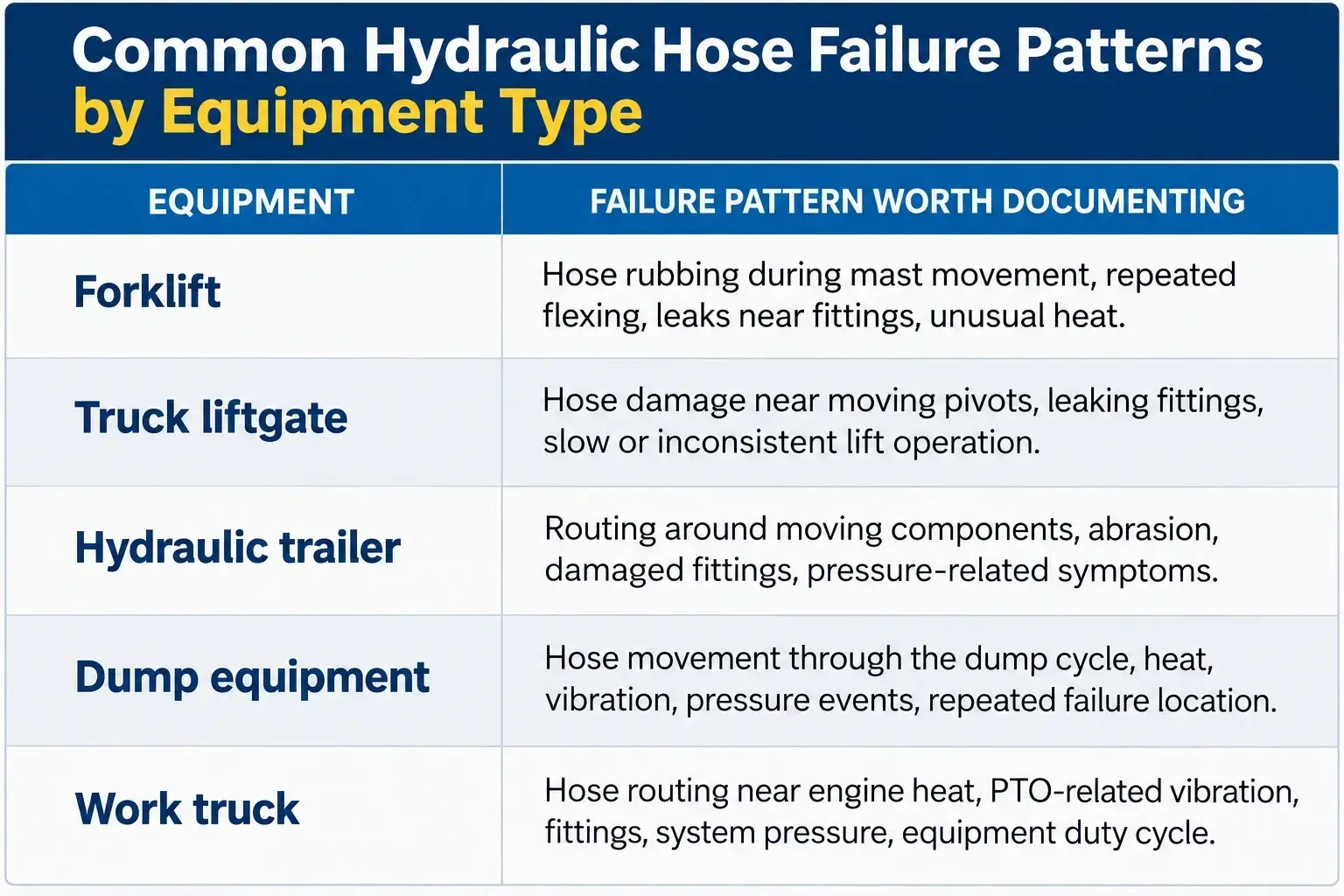
For liftgate-equipped trucks specifically, Oil Can Man’s truck liftgate repair guide covers hydraulic, electrical, mechanical, and load-related symptoms that can overlap.
Preventive Hydraulic Hose Inspection Points
A practical hydraulic hose inspection program should focus on visible condition and operating history rather than waiting for a line to rupture.
Fleet personnel can report:
- Abraded or damaged outer covers
- Cracks or unusual stiffness
- Bulging or distortion
- Wet areas around hoses or fittings
- Hose-to-frame or hose-to-hose contact
- Tight bends
- Poor support or excessive movement
- Damaged guards or clamps
- Unusual heat
- Repeat failures
- Changes in hydraulic performance
Inspection frequency should reflect equipment manufacturer recommendations, hose manufacturer guidance, duty cycle, environment, previous failures, and the consequences of equipment downtime. Avoid imposing one universal replacement interval on every hydraulic application.
When Mobile Hydraulic Hose Repair Should Lead to Deeper Diagnosis
Mobile hydraulic hose repair can be appropriate when an accessible failed hose or fitting can be safely serviced in the field. Oil Can Man’s current hydraulic service page confirms mobile hydraulic work for commercial trucks, forklifts, trailers, and heavy equipment across its South Florida service area. Oil Can Man
However, deeper diagnosis becomes especially important when:
- The same hose has failed repeatedly
- A replacement fails quickly
- Several hoses show similar damage
- Abnormal system heat is present
- The failure occurs near the same fitting each time
- Pressure behavior appears abnormal
- Hydraulic fluid is contaminated
- Pumps, valves, or cylinders show additional symptoms
- The repair requires equipment or disassembly better suited to a facility
The objective is not simply to install another hose. It is to understand why the previous assembly failed so the fleet can make a better repair decision.
The Hose That Failed Twice
Consider a South Florida contractor operating a hydraulic dump truck.
A hose near the dump-body circuit fails and is replaced. Several weeks later, the replacement begins leaking near the same area.
The second hydraulic hose failure should trigger more questions. Is the hose contacting another component during the dump cycle? Is the bend too tight? Is vibration stressing the fitting? Is system pressure behaving normally? Has the routing changed after an earlier repair?
An accessible hose replacement may still be suitable for mobile service, but repeated failure may justify deeper system diagnosis before another replacement is put back into the same operating condition.
Stop Treating Repeat Hose Failures as Separate Events
If a hydraulic hose keeps failing, bring the repair history into the diagnosis.
Oil Can Man provides hydraulic service for trucks, trailers, forklifts, liftgates, and heavy equipment across its verified South Florida service area, with mobile repair for appropriate work and a Fort Lauderdale facility for repairs that require a shop environment.
Call (954) 764-8117 and describe the equipment type, failed hose location, symptoms, number of previous failures, operating conditions, and fleet location. The team can discuss whether the next step should be mobile hose service or broader hydraulic-system diagnosis. The number is currently listed as Oil Can Man’s primary service number. Oil Can Man
You can also use the Oil Can Man contact page to describe the hydraulic problem.
Frequently Asked Questions
Why does the same hydraulic hose keep failing?
Repeated failure can be associated with unresolved abrasion, poor routing, excessive bend or twist, pressure events, heat, incorrect hose selection, fitting problems, vibration, contamination, or another hydraulic-system condition. The failure location and operating history should be evaluated before another replacement is treated as the complete solution.
Is a hydraulic hose leak safe to check by hand?
No. High-pressure hydraulic fluid can penetrate skin and cause serious injury. Do not use a hand or other body part to locate a pressurized leak. Qualified personnel should follow the equipment manufacturer’s shutdown and stored-energy procedures before inspection or repair.
Can mobile service replace a failed hydraulic hose?
Many accessible hose and fitting problems may be suitable for mobile service. Repeated failures, system-pressure problems, extensive disassembly, or issues involving pumps, valves, cylinders, or specialized equipment may require deeper diagnosis or facility-based work.
When should a replacement hose be followed by full hydraulic diagnosis?
Consider broader diagnosis when the same hose repeatedly fails, several hoses develop similar damage, abnormal heat or pressure is present, fluid condition is questionable, or other hydraulic components show performance problems.